

Waking up with a dry mouth can be uncomfortable, especially when it happens night after night. You may wake up with a sticky mouth, sore throat, bad breath, or an intense need for water—and wonder why it keeps happening.
While dehydration can sometimes play a role, waking up with a dry mouth is often linked to mouth breathing, snoring, nasal congestion, certain medications, or other factors that reduce saliva production during the night.
If you’ve been asking yourself, “Why do I wake up with a dry mouth?”, you’re not alone. Occasional morning dry mouth is common, but when it happens regularly, identifying what’s causing it can help you find the right solution.
Want practical sleep tips you can start using tonight? Download our FREE Sleep Better Tonight Guide and discover simple, science-backed habits that can help you sleep more deeply and wake up feeling refreshed.
Dry mouth can also occur alongside other nighttime symptoms, such as waking up gasping for air, waking up every 2 hours, or waking up at 3AM every night. These symptoms can sometimes share underlying causes, including mouth breathing, snoring, disrupted sleep, or breathing problems.
In this article, you’ll discover the 7 most common reasons why you wake up with a dry mouth, what your symptoms may be telling you, and practical steps that may help you wake up feeling more comfortable.
Quick Answer
Waking up with a dry mouth is commonly caused by mouth breathing, dehydration, snoring, nasal congestion, certain medications, or reduced saliva production during sleep. Sleeping with your mouth open can allow moisture to evaporate throughout the night, leaving your mouth and throat dry when you wake up.
Occasional morning dry mouth is usually not a major concern. However, if you wake up with a dry mouth every morning, especially alongside loud snoring, gasping for air, difficulty breathing, or persistent daytime symptoms, it’s worth looking into the underlying cause.
What Does It Mean When You Wake Up With A Dry Mouth?
Waking up with a dry mouth usually means your mouth isn’t producing enough saliva while you sleep, or that you’re losing moisture by breathing through your mouth during the night. Saliva plays an important role in keeping your mouth moist, protecting your teeth, and washing away bacteria. When saliva production decreases, you may wake up with a dry, sticky feeling in your mouth or throat.
In many cases, occasional dry mouth isn’t a cause for concern. It can happen after sleeping with your mouth open, spending time in a dry room, or not drinking enough fluids during the day. However, if you wake up with a dry mouth every morning, it may point to an underlying issue such as mouth breathing, snoring, nasal congestion, certain medications, or a sleep-related breathing problem.
Persistent dry mouth can also disrupt your sleep. You may wake up several times during the night because your mouth or throat feels uncomfortable, making it harder to stay asleep and get the restorative sleep your body needs.
If your dry mouth occurs alongside symptoms such as loud snoring, waking up gasping for air, or difficulty breathing at night, it’s especially important to pay attention to what’s happening while you sleep. These symptoms can sometimes occur together when nighttime breathing is disrupted.
The good news is that once you identify what’s causing your dry mouth, there are often practical steps you can take to improve it. Below, we’ll explore the 7 most common causes of waking up with a dry mouth and what you can do about each one.
1. Mouth Breathing During Sleep
One of the most common reasons for waking up with a dry mouth is breathing through your mouth while you sleep.
When you breathe through your mouth instead of your nose, airflow can cause moisture in your mouth to evaporate more quickly. As a result, you may wake up with a dry or sticky mouth, dry throat, increased thirst, or bad breath in the morning.

Mouth breathing can happen for several reasons, including nasal congestion, allergies, structural problems affecting the nasal passages, or simply sleeping with your mouth open. Some people only experience it occasionally, while others may breathe through their mouth regularly without realizing it.
Mouth breathing can also occur alongside snoring or sleep-related breathing problems. If you regularly wake with a dry mouth and also experience loud snoring, choking, or waking up gasping for air at night, those additional symptoms are worth paying attention to.
Quick Tip
If you often wake up with a dry mouth, try to identify why you’re breathing through your mouth at night. Addressing nasal congestion or allergies when appropriate and using a humidifier if your bedroom air is very dry may help. If dry mouth persists — especially alongside loud snoring, choking, or gasping during sleep — consider discussing your symptoms with a healthcare professional.
2. Dehydration
Another possible reason for waking up with a dry mouth is dehydration.
When your body doesn’t have enough fluids, saliva production can decrease. Because saliva helps keep your mouth moist and protects your teeth and gums, reduced saliva can leave you with a dry, sticky feeling when you wake up.

Dehydration can happen for many reasons, including not drinking enough fluids during the day, sweating heavily, hot weather, exercise, vomiting, diarrhea, or drinking alcohol. If you’re already prone to mouth breathing at night, dehydration may make morning dryness feel even more noticeable.
Some people who wake up with a dry mouth also experience morning headaches. Dehydration can sometimes contribute to headaches, but morning headaches can have several other causes as well — including disrupted sleep and sleep-related breathing problems. If this sounds familiar, you may also want to read our guide on waking up with a headache.
Drinking enough fluids throughout the day can help prevent dehydration. However, you don’t need to drink large amounts of water immediately before bed, as this could lead to additional nighttime awakenings to use the bathroom.
Quick Tip
Focus on staying consistently hydrated throughout the day rather than trying to catch up just before bedtime. If you’re waking up with a dry mouth despite drinking enough fluids, another factor — such as mouth breathing, medication, nasal congestion, or reduced saliva production — may be contributing.
3. Certain Medications
Some medications can cause dry mouth as a side effect by reducing saliva production or otherwise affecting how much saliva is available in your mouth.

Saliva helps keep your mouth moist and plays an important role in protecting your teeth and gums. If a medication reduces saliva production, you may notice dryness during the night or wake up with a dry mouth in the morning.
Dry mouth can occur with several types of medication, including some:
- Antihistamines
- Antidepressants
- Anti-anxiety medications
- Decongestants
- Blood pressure medications
Whether dry mouth occurs — and how noticeable it becomes — depends on the specific medication, dose, and individual.
If you recently started a new medication, changed your dose, or began experiencing dry mouth around the same time, check the medication information and discuss the symptom with your healthcare provider or pharmacist.
Don’t stop or change a prescribed medication on your own. A healthcare professional can determine whether your medication may be contributing and advise you on appropriate ways to manage the side effect.
Quick Tip
If you suspect a medication is causing your dry mouth, try drinking enough water throughout the day and keep a glass of water by your bed if needed. If the symptoms become bothersome or persistent, speak with your healthcare provider about possible alternatives or ways to manage the side effect.
4. Sleeping With Your Mouth Open
Even if you normally breathe through your nose during the day, sleeping with your mouth open can contribute to waking up with a dry mouth.
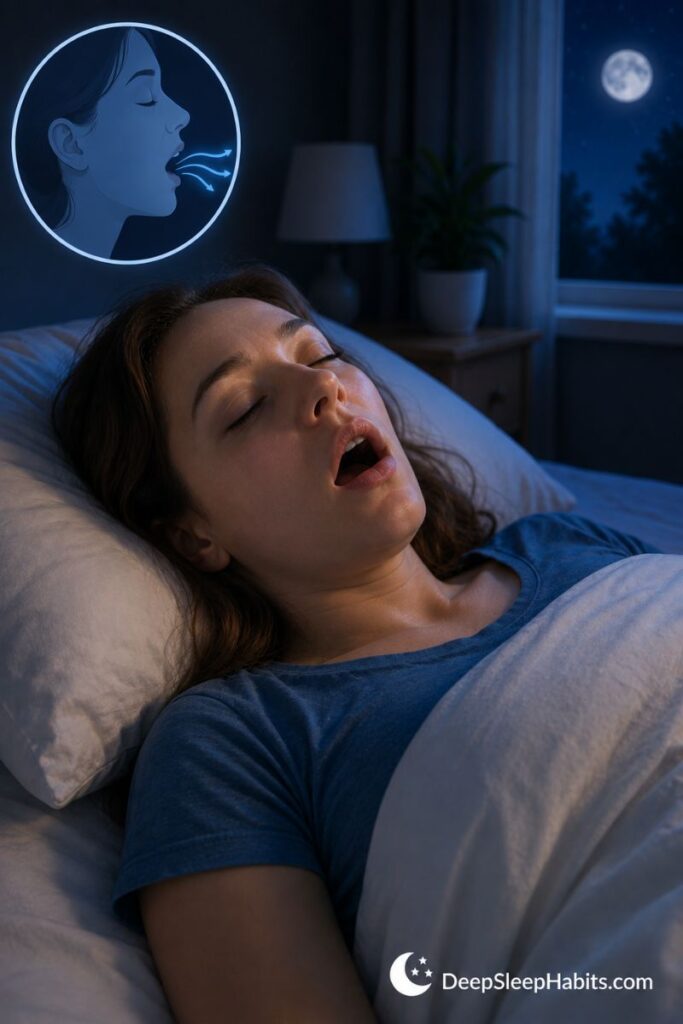
When your mouth stays open during sleep, airflow can increase moisture loss from your mouth and throat. This can leave you waking up with a dry or sticky mouth, dry throat, increased thirst, or bad breath in the morning.
Several factors can make sleeping with your mouth open more likely. Nasal congestion, allergies, snoring, or difficulty breathing comfortably through your nose can all encourage mouth breathing during sleep. Your sleeping position may also influence nighttime breathing for some people.
If you notice that your dry mouth is worse after sleeping on your back — particularly if you also snore — experimenting with a different sleeping position may be worth trying. However, repeatedly sleeping with your mouth open can also have an underlying cause, so position isn’t always the complete explanation.
Quick Tip
If you regularly wake up with a dry mouth, pay attention to whether you also have a blocked nose, snore, or wake with your mouth open. Addressing nasal congestion when appropriate and experimenting with your sleeping position may help. If you regularly experience loud snoring, choking, or gasping during sleep, discuss these symptoms with a healthcare professional.
5. Dry Bedroom Air
The air in your bedroom can also contribute to waking up with a dry mouth, particularly when indoor humidity is low.
During colder months, indoor heating can make the air feel especially dry. Air conditioning may have a similar effect in some environments. When the air around you is dry, moisture can evaporate more easily from your mouth and throat while you sleep, leaving you with a dry mouth, sore throat, or scratchy feeling in the morning.
Dry bedroom air may be even more noticeable if you already breathe through your mouth or sleep with your mouth open, since airflow through the mouth can increase moisture loss.
If the air in your bedroom is very dry, a humidifier may help make the environment more comfortable. However, it’s important not to make the room excessively humid, as too much moisture can encourage mold and dust mites.
Quick Tip
If your bedroom often feels dry, consider checking the humidity level rather than automatically using a humidifier. If the air is consistently dry, adding some moisture with a properly cleaned humidifier may help reduce nighttime mouth and throat dryness.
6. Alcohol or Caffeine Before Bed
What you drink in the hours before bed may also influence waking up with a dry mouth, although alcohol and caffeine can affect your sleep in different ways.

Alcohol can contribute to dry mouth and may also relax the muscles of the upper airway, which can worsen snoring or mouth breathing in some people. If you spend more of the night breathing through your mouth, you may be more likely to wake up with a dry mouth or throat.
Caffeine is different. It isn’t usually a major direct cause of dry mouth when consumed in typical amounts, but having caffeine too close to bedtime can interfere with sleep in people who are sensitive to it. Coffee and other caffeinated drinks may also contribute to a dry-mouth sensation in some people.
If you regularly wake up with a dry mouth, it may be worth paying attention to whether the problem is worse on evenings when you drink alcohol or consume caffeine later in the day.
Quick Tip
Try reducing alcohol close to bedtime and, if caffeine affects your sleep, avoid it later in the day. Rather than following a strict cutoff that works for everyone, pay attention to how your own sleep responds and adjust your timing accordingly.
7. Sleep Disorders
In some cases, waking up with a dry mouth can occur alongside an underlying sleep disorder, particularly obstructive sleep apnea (OSA).

Obstructive sleep apnea occurs when the upper airway repeatedly becomes narrowed or blocked during sleep, disrupting normal breathing. These breathing disturbances can lead to brief awakenings throughout the night and are often associated with loud snoring, gasping or choking, and disrupted sleep.
Dry mouth is also commonly reported by people with sleep apnea, particularly when mouth breathing occurs during the night. However, waking up with a dry mouth by itself doesn’t mean you have sleep apnea.
Other symptoms that may occur with obstructive sleep apnea include morning headaches, excessive daytime sleepiness, difficulty concentrating, and waking repeatedly during the night. Some people may also wake up gasping or choking.
If you’re regularly waking up with a dry mouth alongside several of these symptoms, it’s worth discussing them with a healthcare professional. They can determine whether further evaluation for a sleep-related breathing disorder may be appropriate.
Quick Tip
Pay attention to symptoms that occur alongside your dry mouth. If you regularly experience loud snoring, gasping or choking during sleep, repeated nighttime awakenings, or significant daytime sleepiness, speak with a healthcare professional rather than assuming dry mouth is simply caused by dehydration or your bedroom environment.
How to Stop Waking Up With a Dry Mouth
If you regularly wake up with a dry mouth, the best way to reduce it depends on what’s causing the dryness in the first place. Mouth breathing, dehydration, dry bedroom air, medications, alcohol, and sleep-related breathing problems may all require a different approach.
While you may not be able to prevent every episode of dry mouth, a few practical changes can help address some of the most common causes:
- Stay hydrated throughout the day rather than drinking large amounts of water right before bed.
- Address nasal congestion or allergies if they’re making it difficult to breathe comfortably through your nose.
- Pay attention to your sleeping position, particularly if you notice more mouth breathing or snoring when sleeping on your back.
- Check your bedroom humidity and consider a properly maintained humidifier if the air is consistently dry.
- Limit alcohol close to bedtime and reduce caffeine later in the day if it interferes with your sleep.
- Review persistent dry mouth with your doctor or pharmacist if it began after starting or changing a medication. Don’t stop prescribed medication on your own.
- Talk to a healthcare professional if dry mouth regularly occurs alongside loud snoring, gasping or choking during sleep, repeated awakenings, or excessive daytime sleepiness.
Finding the underlying cause is usually more useful than simply keeping water beside your bed. Pay attention to when your dry mouth occurs and which other symptoms happen alongside it. That can help you determine which changes are most relevant.
Want more simple habits that can support a better night’s sleep?
When Should You See a Doctor?
Occasionally waking up with a dry mouth is usually not a cause for concern. It may happen because of temporary dehydration, dry bedroom air, nasal congestion, or sleeping with your mouth open.
However, if you wake up with a dry mouth every morning, the problem persists despite making simple changes, or you develop other symptoms, it’s worth discussing it with a healthcare professional.
Consider seeking medical advice if you:
- Wake up with a dry mouth almost every morning, especially if it’s persistent or uncomfortable.
- Experience loud snoring, gasping or choking during sleep, or someone notices pauses in your breathing.
- Have persistent difficulty swallowing, speaking, or chewing because your mouth feels unusually dry.
- Develop frequent mouth sores, tooth decay, or problems with your gums.
- Notice ongoing dry mouth after starting or changing a medication.
- Experience significant daytime sleepiness or fatigue, particularly alongside snoring or nighttime breathing problems.
A healthcare professional can help determine whether your dry mouth may be related to medication, reduced saliva production, an underlying medical condition, or a sleep-related breathing disorder and recommend appropriate next steps.
FAQ About Waking Up With a Dry Mouth
Why Do I Wake Up With a Dry Mouth Every Morning?
If you wake up with a dry mouth every morning, mouth breathing is one possible explanation, but there are several others. Dehydration, nasal congestion, dry bedroom air, certain medications, reduced saliva production, and sleep-related breathing problems can all contribute. Pay attention to other symptoms that occur alongside the dryness, such as a blocked nose, snoring, morning headaches, or daytime sleepiness. If dry mouth happens persistently despite making simple changes, consider discussing it with a healthcare professional or dentist.
Can Sleeping With My Mouth Open Cause Dry Mouth?
Yes. Sleeping with your mouth open can contribute to dry mouth because airflow increases moisture loss from your mouth and throat while you sleep. You may wake with a sticky mouth, dry throat, bad breath, or increased thirst. Nasal congestion, allergies, snoring, and difficulty breathing comfortably through your nose can make nighttime mouth breathing more likely. If you frequently sleep with your mouth open, identifying why it’s happening may be more helpful than simply drinking extra water before bed.
Why Do I Wake Up With a Dry Mouth and Sore Throat?
Waking up with a dry mouth and sore throat can happen when you breathe through your mouth during sleep, allowing airflow to dry the tissues in your mouth and throat. Dry bedroom air, nasal congestion, allergies, and snoring may also contribute. If the symptoms are occasional, addressing congestion or dry indoor air may help. However, persistent symptoms — particularly when accompanied by loud snoring, choking, gasping during sleep, or significant daytime sleepiness — are worth discussing with a healthcare professional.
Can Sleep Apnea Cause Dry Mouth?
Dry mouth can occur in people with obstructive sleep apnea, particularly when mouth breathing or snoring happens during sleep. However, waking up with a dry mouth by itself doesn’t mean you have sleep apnea. Other possible signs include loud snoring, gasping or choking during sleep, witnessed pauses in breathing, morning headaches, and excessive daytime sleepiness. If you regularly experience dry mouth alongside several of these symptoms, speak with a healthcare professional about whether evaluation for a sleep-related breathing disorder may be appropriate.
How Can I Stop Waking Up With a Dry Mouth?
How to stop waking up with a dry mouth depends on what’s causing it. Staying hydrated throughout the day, addressing nasal congestion, checking whether your bedroom air is unusually dry, and limiting alcohol close to bedtime may help in some cases. If medication appears to be contributing, discuss it with your doctor or pharmacist rather than changing it yourself. Persistent dry mouth — especially alongside snoring, gasping, swallowing difficulties, dental problems, or significant daytime sleepiness — should be discussed with a healthcare professional.
Final Thoughts
Waking up with a dry mouth can be uncomfortable, especially when it happens night after night. In many cases, however, identifying what is contributing to the dryness can help you determine which changes are most likely to help.
Common causes include mouth breathing, dehydration, certain medications, dry bedroom air, sleeping with your mouth open, and sleep-related breathing problems. Rather than assuming you simply need to drink more water, pay attention to when your dry mouth occurs and whether you notice other symptoms alongside it.
Simple changes — such as staying hydrated throughout the day, addressing nasal congestion when appropriate, checking your bedroom humidity, and adjusting habits that may contribute to mouth breathing — may help reduce nighttime dryness.
If you continue to wake up with a dry mouth every morning, particularly alongside loud snoring, gasping or choking during sleep, swallowing difficulties, dental problems, or significant daytime sleepiness, consider discussing your symptoms with a healthcare professional.
Understanding why you wake up with a dry mouth is the first step toward finding an approach that addresses the underlying cause rather than just temporarily relieving the dryness.