

Wake up feeling angry or irritated can be confusing, especially if you don’t remember anything upsetting happening during the night. Instead of feeling refreshed after a full night’s sleep, you may wake up frustrated, short-tempered, or emotionally drained before your day has even begun.
Although it’s easy to assume you’re simply “not a morning person,” your mood after waking up is often influenced by what happened while you were asleep. Poor sleep quality, frequent awakenings, stress, changes in your sleep cycle, and underlying health conditions can all affect the way your brain regulates emotions overnight. When your body doesn’t get enough restorative sleep, it’s much harder to wake up feeling calm, focused, and emotionally balanced.
If you’re looking for practical, science-backed ways to improve your sleep and wake up feeling more refreshed, be sure to download our Free Sleep Better Tonight Guide. It includes simple habits that support deeper sleep, help calm your nervous system, and reduce common sleep disruptions naturally.
Feeling angry or irritated in the morning is also often part of a bigger sleep pattern. Many people who struggle with morning irritability also experience waking up multiple times during the night, restless sleep, or never feeling fully rested. Understanding what’s disrupting your sleep is the first step toward improving both your mood and your overall well-being.
In this article, you’ll discover the 7 most common causes of waking up feeling angry or irritated, learn why poor sleep can have such a powerful effect on your emotions, and find practical strategies to help you wake up feeling calmer, more refreshed, and ready to start the day.
Quick Answer
Waking up feeling angry or irritated is often a sign that your brain and body didn’t get enough restorative sleep. Common causes include poor sleep quality, stress, anxiety, frequent nighttime awakenings, blood sugar fluctuations, hormone changes, and sleep disorders such as sleep apnea. Identifying the underlying cause can help improve both your sleep and your mood.
What Does It Mean to Wake Up Feeling Angry or Irritated?
Waking up feeling angry or irritated doesn’t necessarily mean you’re naturally short-tempered or simply “not a morning person.” In many cases, it’s a sign that your brain and body didn’t get the restorative sleep they need to regulate emotions and recover overnight.
While you sleep, your brain processes emotions, balances stress hormones, and restores the nervous system. If this process is disrupted by poor sleep quality, frequent awakenings, stress, hormone fluctuations, or an underlying sleep disorder, you may wake up feeling unusually frustrated, impatient, or emotionally overwhelmed before your day has even begun.
Research suggests that even a single night of poor-quality sleep can reduce emotional resilience, making everyday situations feel more irritating than they normally would. This happens because sleep deprivation affects the parts of the brain responsible for emotional regulation, decision-making, and stress management.
The encouraging news is that morning irritability is often temporary. Once you identify and address the underlying cause, your sleep quality can improve—making it much easier to wake up feeling calm, refreshed, and emotionally balanced.
7 Common Causes of Waking Up Feeling Angry or Irritated
Waking up feeling angry or irritated isn’t usually caused by just one thing. In many cases, it’s the result of poor sleep, stress, hormone changes, or other factors that affect your brain’s ability to regulate emotions overnight.
Some causes are relatively uncommon, while others affect millions of people every night. Below, we’ll walk through the seven most common reasons you may wake up feeling angry or irritated, starting with the less common causes before moving on to the ones that occur most often.
1. Hormonal Changes
Hormones play an important role in regulating both your sleep and your emotions. Throughout the night, your body carefully balances hormones such as cortisol, melatonin, estrogen, progesterone, and testosterone to support restorative sleep and help you wake up feeling mentally and physically refreshed.

When these hormone levels fluctuate, your mood can be affected before your day has even begun. Some people notice increased irritability, frustration, or emotional sensitivity during hormonal changes related to menstruation, pregnancy, perimenopause, menopause, or certain medical conditions.
Hormonal changes can also influence how well you sleep. Poor sleep caused by hormone fluctuations may reduce your brain’s ability to regulate emotions overnight, making you more likely to wake up feeling angry or irritated even after spending enough time in bed.
While hormonal changes aren’t the most common cause of morning irritability, they’re worth considering if your symptoms seem to follow a predictable pattern or occur alongside other hormonal symptoms.
Quick Tip
If you notice that your mood changes follow a regular pattern, consider tracking your sleep and symptoms for a few weeks. Sharing this information with your healthcare provider can help identify whether hormonal changes may be contributing to your morning irritability.
2. Blood Sugar Fluctuations
Your brain relies on a steady supply of glucose throughout the night to support healthy sleep and regulate emotions. If your blood sugar drops too low or rises and falls rapidly while you’re asleep, your body may respond by releasing stress hormones such as cortisol and adrenaline to restore balance.

Although this response is completely normal, it can briefly activate your nervous system and affect the quality of your sleep. Even if you don’t fully wake up, these small disruptions may reduce the amount of restorative sleep your brain receives, making it more difficult to regulate emotions by morning.
Some people notice that they wake up feeling unusually irritable, shaky, hungry, or emotionally sensitive after nights when their blood sugar has fluctuated. This may be more common if you skip dinner, eat large amounts of sugary foods before bed, drink alcohol in the evening, or have an underlying condition that affects blood sugar regulation.
Maintaining stable blood sugar levels overnight may help support more restorative sleep and make it easier to wake up feeling calm, refreshed, and emotionally balanced.
Quick Tip
Eating a balanced evening meal with protein, healthy fats, and complex carbohydrates may help keep your blood sugar more stable overnight. If you frequently wake up feeling shaky, hungry, or unusually irritable, discuss your symptoms with your healthcare provider.
3. Certain Medications
Some medications can affect both your sleep quality and your mood, making it more likely that you’ll wake up feeling angry or irritated. While not everyone experiences these side effects, certain prescription and over-the-counter medications can interfere with the brain’s normal sleep processes or influence the chemicals that regulate emotions.

For example, some antidepressants, corticosteroids, stimulant medications, blood pressure medications, and even certain cold or allergy medicines may contribute to lighter sleep, vivid dreams, or more frequent nighttime awakenings. As a result, your brain may spend less time in the restorative stages of sleep that help regulate mood and emotional resilience.
It’s important to remember that you should never stop taking prescribed medication without first speaking to your healthcare provider. If you’ve recently started a new medication and notice changes in your sleep or mood, it may be worth discussing possible side effects with your doctor or pharmacist.
Quick Tip
If you suspect that a medication is affecting your sleep or causing morning irritability, keep a record of when your symptoms occur and speak with your healthcare provider. They may be able to adjust the dosage, change the timing, or recommend an alternative treatment if appropriate.
4. Circadian Rhythm Disruption
Your circadian rhythm is your body’s internal clock, helping regulate when you feel awake, sleepy, and emotionally balanced throughout the day. When this natural rhythm becomes disrupted, it can affect both your sleep quality and your mood the following morning.

An irregular sleep schedule, shift work, jet lag, staying up late, or inconsistent bedtimes can all interfere with your circadian rhythm. As a result, your brain may spend less time in the most restorative stages of sleep, making it harder to regulate emotions overnight.
Even if you sleep for seven or eight hours, sleeping at inconsistent times can leave you feeling mentally drained and emotionally reactive. Many people notice they’re more impatient, irritable, or easily frustrated after nights when their normal sleep routine has been disrupted.
Supporting your body’s natural sleep-wake cycle can improve both sleep quality and emotional well-being, making it easier to wake up feeling calm, refreshed, and ready for the day.
Quick Tip
ry to go to bed and wake up at the same time every day, including weekends. A consistent sleep schedule helps strengthen your body’s internal clock and supports deeper, more restorative sleep.
5. Stress and Anxiety
Stress and anxiety are among the most common reasons people wake up feeling angry or irritated. Even if you don’t feel particularly stressed during the day, your brain and body can remain in a heightened state of alertness throughout the night.

When you’re under stress, your body produces higher levels of cortisol and adrenaline—the hormones responsible for your “fight-or-flight” response. While these hormones are helpful during genuine emergencies, chronically elevated levels can interfere with deep, restorative sleep and make it more difficult for your brain to recover overnight.
As a result, you may wake up feeling emotionally drained, impatient, or unusually reactive. Small inconveniences that normally wouldn’t bother you can suddenly feel overwhelming because your brain hasn’t had the opportunity to fully regulate emotions during sleep.
Many people who wake up feeling angry also notice other symptoms of nighttime stress, such as a racing heart, frequent awakenings, restless sleep, or waking up with anxious thoughts. These signs often occur together and may indicate that chronic stress is affecting your sleep quality more than you realize.
Quick Tip
Creating a relaxing bedtime routine, limiting screen time before bed, and practicing simple relaxation techniques such as deep breathing or meditation may help calm your nervous system and improve both your sleep quality and your mood when you wake up.
6. Poor Sleep Quality and Frequent Night Awakenings
One of the most common reasons for waking up feeling angry or irritated is poor sleep quality. Even if you spend seven or eight hours in bed, your brain may not get enough deep, restorative sleep if your sleep is repeatedly interrupted throughout the night.

Frequent awakenings prevent your brain from completing the natural sleep cycles needed to restore the nervous system, regulate emotions, and process stress. Over time, this lack of restorative sleep can leave you feeling mentally exhausted, emotionally reactive, and much less able to cope with everyday frustrations.
Many people don’t even remember waking up during the night. Brief awakenings can happen because of stress, noise, an uncomfortable sleeping environment, changes in blood sugar, or other sleep disturbances. Although these awakenings may only last a few seconds, they can still reduce your overall sleep quality.
If you regularly wake up multiple times during the night, it’s important to identify what’s disrupting your sleep. Improving your sleep quality often leads to better emotional regulation, making it much easier to wake up feeling calm, refreshed, and emotionally balanced.
Quick Tip
If you often wake up feeling angry despite getting enough hours of sleep, focus on improving your sleep quality rather than simply sleeping longer. Reducing nighttime interruptions and supporting deeper sleep can make a significant difference in how you feel the next morning.
7. Sleep Disorders (Especially Sleep Apnea)
An underlying sleep disorder is one of the most common reasons people wake up feeling angry, irritable, or emotionally exhausted. Conditions such as obstructive sleep apnea repeatedly interrupt your breathing throughout the night, often without you even realizing it.
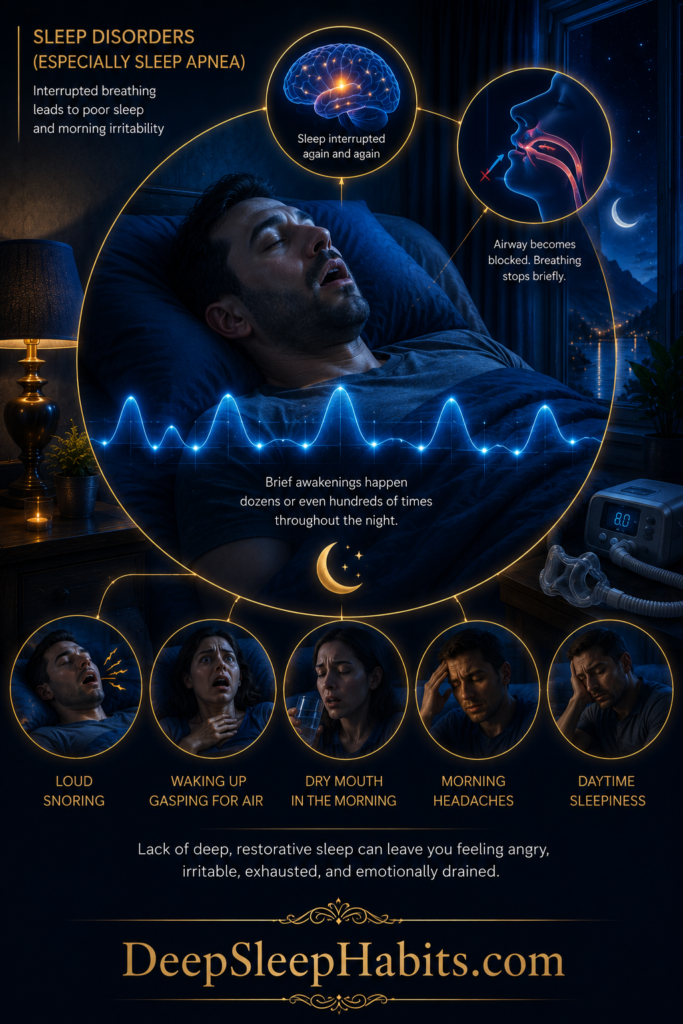
Each time your breathing briefly stops, your brain partially wakes you to reopen your airway. Although these awakenings may only last a few seconds, they can happen dozens or even hundreds of times during a single night. This prevents your brain from reaching the deep, restorative stages of sleep needed to regulate emotions, recover physically, and restore energy.
As a result, many people with untreated sleep apnea wake up feeling unusually irritable, exhausted, or mentally foggy. They may also experience symptoms such as loud snoring, waking up gasping for air, waking up with a dry mouth, morning headaches, or excessive daytime sleepiness.
If these symptoms sound familiar, it’s important not to ignore them. Sleep apnea is a medical condition that can affect both your sleep quality and your long-term health, but effective treatments are available and can significantly improve how you feel each morning.
Quick Tip
If you frequently wake up feeling angry alongside loud snoring, gasping for air, or a dry mouth, speak with your healthcare provider. Identifying and treating an underlying sleep disorder can dramatically improve both your sleep quality and your overall well-being.
How to Stop Waking Up Feeling Angry or Irritated
Waking up feeling angry or irritated isn’t something you have to accept as normal. In many cases, improving your sleep quality and addressing the underlying cause can make a noticeable difference in both your mood and your overall well-being.
Here are several practical steps that may help:
Follow a Consistent Sleep Schedule
Going to bed and waking up at the same time every day helps regulate your body’s internal clock. A consistent sleep schedule supports deeper, more restorative sleep and makes it easier for your brain to regulate emotions overnight.
Create a Relaxing Bedtime Routine
Give your mind and body time to unwind before bed. Reading, gentle stretching, meditation, or deep breathing exercises can help lower stress levels and prepare you for restful sleep.
Limit Caffeine and Alcohol Before Bed
Caffeine can stay in your system for several hours, while alcohol may disrupt your sleep later in the night. Limiting both in the evening can improve your sleep quality and reduce nighttime awakenings.
Manage Daily Stress
Chronic stress is one of the biggest contributors to poor sleep and morning irritability. Regular exercise, mindfulness, journaling, or spending time outdoors may help calm your nervous system and improve emotional resilience.
Optimize Your Sleep Environment
A cool, quiet, and dark bedroom helps your body stay asleep throughout the night. Reducing noise, blocking excess light, and maintaining a comfortable room temperature can improve sleep quality.
Talk to Your Healthcare Provider if Symptoms Persist
If you frequently wake up feeling angry despite getting enough sleep, or if your symptoms occur alongside loud snoring, gasping for air, or excessive daytime fatigue, it’s important to speak with a healthcare provider to rule out an underlying sleep disorder.
When to See a Doctor
Occasionally waking up feeling angry or irritated is usually nothing to worry about. Everyone has restless nights from time to time, and poor sleep, temporary stress, or changes in your daily routine can all affect your mood the following morning.
However, if you regularly wake up feeling angry, irritable, or emotionally overwhelmed for several weeks despite getting enough sleep, it may be worth speaking with your healthcare provider. Persistent morning mood changes can sometimes be linked to an underlying sleep disorder, chronic stress, depression, anxiety, hormonal imbalances, or another medical condition that requires evaluation.
You should also seek medical advice if your symptoms occur alongside loud snoring, waking up gasping for air, frequent nighttime awakenings, severe daytime fatigue, chest pain, difficulty breathing, or significant changes in your mental health. Identifying and treating the underlying cause can often improve both your sleep quality and your emotional well-being.
If your morning irritability is becoming more frequent, affecting your relationships, work, or daily life, don’t ignore it. A healthcare professional can help determine what’s disrupting your sleep and recommend the most appropriate treatment based on your individual situation.
FAQ: Wake Up Feeling Angry or Irritated
Why do I wake up feeling angry or irritated?
Waking up feeling angry or irritated is often linked to poor sleep quality, stress, anxiety, frequent nighttime awakenings, hormone fluctuations, or an underlying sleep disorder such as sleep apnea. When your brain doesn’t get enough restorative sleep, it becomes harder to regulate emotions, making you more likely to wake up feeling frustrated or emotionally overwhelmed.
Can poor sleep make you feel angry?
Yes. Poor sleep affects the areas of the brain responsible for emotional regulation, stress management, and decision-making. Even one night of disrupted sleep can make you more irritable, impatient, and emotionally reactive the next day.
Is it normal to wake up angry every morning?
Occasionally waking up angry after a poor night’s sleep is common. However, if it happens frequently or starts affecting your daily life, it may indicate an underlying sleep problem, chronic stress, anxiety, or another health condition that should be evaluated.
Can anxiety cause morning irritability?
Yes. Anxiety can keep your nervous system active throughout the night, making it difficult to reach deep, restorative sleep. As a result, many people wake up feeling tense, emotionally drained, or unusually irritable.
Can sleep apnea make you wake up feeling angry?
Yes. Sleep apnea repeatedly interrupts your breathing during sleep, reducing the amount of restorative sleep your brain receives. Many people with untreated sleep apnea wake up feeling exhausted, irritable, and mentally foggy in the morning.
Final Thoughts
Waking up feeling angry or irritated can be frustrating, especially when you don’t know what’s causing it. In many cases, however, it’s not simply a bad mood—it’s your body’s way of telling you that something may be interfering with your sleep or emotional recovery overnight.
Whether the cause is stress, anxiety, poor sleep quality, an irregular sleep schedule, hormone changes, or an underlying sleep disorder, identifying the root cause is the first step toward feeling better. Small improvements to your sleep habits can often lead to noticeable changes in both your mood and your overall well-being.
If your symptoms persist or become more severe, don’t hesitate to seek medical advice. With the right support and healthy sleep habits, it’s possible to wake up feeling calmer, more refreshed, and ready to enjoy the day.