
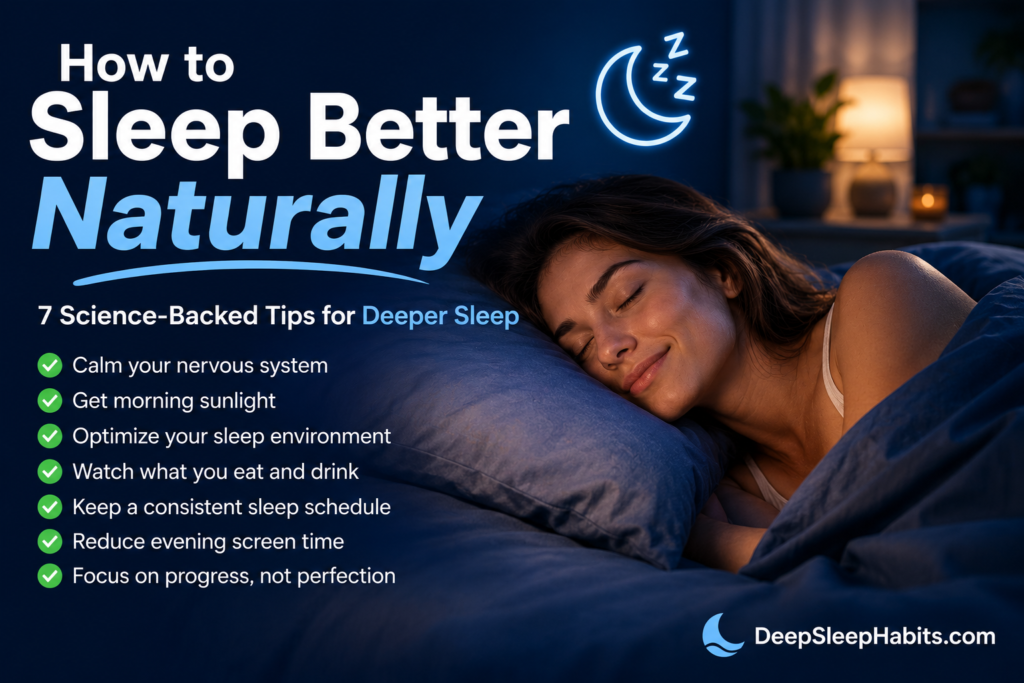
If you’ve been searching for how to sleep better naturally, you’re certainly not alone. Millions of people struggle to fall asleep, stay asleep, or wake up feeling refreshed. The good news is that improving your sleep doesn’t always require medication. In many cases, small, consistent lifestyle changes can make a significant difference in both your sleep quality and how you feel during the day.
Natural sleep is about giving your body the right conditions to do what it was designed to do. Your sleep is influenced by everything from your daily routine and stress levels to your diet, light exposure, and bedtime habits. Even small adjustments—such as following a regular sleep schedule, creating a relaxing evening routine, or reducing screen time before bed—can help your body fall asleep more easily and stay asleep longer.
If you’re ready to improve your sleep, download our FREE Sleep Better Tonight Guide for simple, science-backed strategies that can help you build healthier sleep habits and wake up feeling more refreshed.
If you’re already experiencing symptoms such as waking up feeling exhausted, waking multiple times during the night, or struggling to get enough deep sleep, improving your overall sleep habits is often one of the best places to start. Better sleep doesn’t happen overnight, but small, consistent changes can lead to meaningful improvements over time.
In this article, you’ll discover 7 simple, science-backed ways to sleep better naturally, improve your sleep quality, and wake up feeling more rested every morning.
Quick Answer
The best way to sleep better naturally is to build consistent sleep habits that support your body’s internal clock. Keeping a regular sleep schedule, creating a relaxing bedtime routine, managing stress, limiting evening light exposure, optimizing your sleep environment, and making healthy lifestyle choices can all improve sleep quality without relying on medication.
What Does It Mean to Sleep Better Naturally?
Sleeping better naturally means improving your sleep by supporting your body’s natural sleep-wake cycle instead of relying on medication or quick fixes. While sleeping pills may provide temporary relief for some people, healthy sleep habits are often the foundation of long-term, restorative sleep.
Your body follows an internal circadian rhythm, sometimes called your biological clock. This natural cycle helps regulate when you feel awake, when you become sleepy, and how your body moves through the different stages of sleep. Factors such as light exposure, stress, exercise, diet, and your bedtime routine all influence how well this system functions.
When these habits are out of balance, you may find it harder to fall asleep, wake up more frequently during the night, or wake up feeling tired despite spending enough hours in bed. Over time, poor sleep quality can affect your energy levels, concentration, mood, immune system, and overall health.
The good news is that your sleep habits can be improved. Small, consistent changes—such as keeping a regular sleep schedule, creating a relaxing bedtime routine, limiting evening light exposure, and making healthy lifestyle choices—can help your body return to a more natural sleep rhythm. Although results don’t usually happen overnight, these habits often lead to deeper, more restorative sleep over time.
If you’re wondering why sleep quality matters so much, understanding what happens during the deeper stages of sleep can be incredibly helpful. Learn more in our guide on What Is Deep Sleep and Why It Matters, where we explain how deep sleep supports your brain, body, and overall health.
Below are 7 simple, science-backed ways to sleep better naturally and build healthy sleep habits that can improve your sleep quality for years to come.
7 Science-Backed Ways to Sleep Better Naturally
Sleeping better naturally isn’t about finding one perfect solution. Instead, it’s about building habits that help your body and mind work with your natural sleep cycle rather than against it.
Many people focus on getting more hours of sleep, but sleep quality is often just as important as sleep duration. Small changes to your daily routine, bedtime habits, and sleep environment can have a lasting impact on how quickly you fall asleep, how often you wake during the night, and how refreshed you feel the next morning.
The seven strategies below are supported by sleep research and are designed to improve your sleep naturally—without relying on medication. While some tips may seem simple, consistently applying them can make a noticeable difference over time.
Whether you’re struggling to fall asleep, waking up during the night, or simply looking to improve your overall sleep quality, these science-backed habits can help you create healthier, more restorative sleep for the long term.
1. Calm Your Nervous System Before Bed
Many people think sleep begins the moment they close their eyes. In reality, quality sleep starts long before you get into bed. If your nervous system is still in a state of alertness, your body may struggle to transition into the deep, restorative sleep it needs.

Throughout the day, your brain responds to emails, social media, work, family responsibilities, and countless other forms of stimulation. Even if you feel physically tired, your nervous system may still be producing stress hormones such as cortisol and adrenaline, making it harder to fully relax at bedtime.
When your nervous system remains active, you may notice that you:
- Take longer to fall asleep
- Wake up more often during the night
- Feel restless despite sleeping enough hours
- Wake up feeling tired or mentally overwhelmed
Creating a calming bedtime routine helps signal to your brain that the day is coming to an end. Activities such as reading a book, gentle stretching, meditation, deep breathing, or listening to relaxing music can all help shift your body from “fight or flight” into “rest and digest” mode.
If you often wake up feeling anxious or restless during the night, calming your nervous system may be one of the most effective changes you can make. Learn more in our guide on Why Do I Wake Up With Anxiety at Night?
Quick Tip
Set aside 20–30 minutes every evening for a calming routine before bed. Avoid checking emails or social media during this time, and instead choose activities that help your mind slow down. The more consistently you practice this habit, the easier it becomes for your body to recognize that it’s time to sleep.
2. Get Morning Sunlight Every Day
One of the simplest—and most overlooked—ways to sleep better naturally is to get natural sunlight soon after you wake up. Morning light plays a crucial role in regulating your circadian rhythm, your body’s internal clock that controls when you feel awake and when you naturally become sleepy.

When sunlight reaches your eyes, it sends a signal to your brain that it’s time to be alert. This helps reduce the production of melatonin, the hormone that makes you feel sleepy, while increasing your natural alertness. Later in the evening, your body begins producing melatonin again at the right time, making it easier to fall asleep.
If you spend most mornings indoors or in dim lighting, your internal clock can become less synchronized. This may make it harder to fall asleep at night, cause you to wake during the night, or leave you feeling tired in the morning.
You may benefit from more morning sunlight if you:
- Struggle to fall asleep at night
- Wake up feeling tired despite enough sleep
- Feel sleepy throughout the day
- Have an irregular sleep schedule
- Spend most of your mornings indoors
Even 10–30 minutes of natural daylight shortly after waking can help strengthen your body’s natural sleep-wake cycle and improve your sleep quality over time.
Quick Tip
Try to get outside within the first hour after waking, even if it’s only for a short walk or while enjoying your morning coffee. Natural daylight is far more effective than indoor lighting at helping your body maintain a healthy sleep rhythm.
3. Optimize Your Sleep Environment
Your bedroom should make it as easy as possible for your body to fall asleep and stay asleep. Even if you have healthy sleep habits, a room that’s too warm, noisy, bright, or uncomfortable can reduce your sleep quality without you realizing it.

Your brain continues to respond to your surroundings throughout the night. Light entering through a window, traffic noise, or a mattress that doesn’t properly support your body can cause small sleep disruptions. Although you may not remember waking up, these interruptions can reduce the amount of deep, restorative sleep you get.
Creating a sleep-friendly environment doesn’t have to be expensive. Small adjustments can make a noticeable difference, including:
- Keeping your bedroom cool (around 16–19°C / 60–67°F)
- Using blackout curtains to block outside light
- Reducing noise with earplugs or white noise if needed
- Choosing a comfortable mattress and supportive pillow
- Keeping your bedroom clean, quiet, and relaxing
Your bedroom should send one clear message to your brain: this is a place for rest. The fewer distractions your body has to process during the night, the easier it becomes to fall asleep, stay asleep, and wake up feeling refreshed.
If you’re easily disturbed by sounds, light, or movement during the night, our guide on Why Am I Such a Light Sleeper? explains why some people wake up more easily than others and what you can do about it.
Quick Tip
Take a few minutes to look around your bedroom tonight. Ask yourself whether anything—such as light, noise, temperature, or an uncomfortable pillow—is quietly disrupting your sleep. Small improvements to your sleep environment can have a surprisingly big impact over time.
4. Watch What You Eat and Drink Before Bed
What you eat and drink in the hours before bedtime can have a significant impact on how well you sleep. While some foods help your body prepare for sleep, others can make it more difficult to fall asleep, stay asleep, or reach the deeper stages of restorative sleep.

Caffeine is one of the most common culprits. Because it can remain in your body for several hours, drinking coffee, energy drinks, or strong tea late in the day may keep your brain more alert than you realize. Alcohol can also be misleading. Although it may make you feel sleepy at first, it often disrupts your sleep later in the night and reduces overall sleep quality.
Heavy meals close to bedtime can make your digestive system work harder while you’re trying to rest. On the other hand, going to bed extremely hungry may also interfere with your sleep by causing discomfort or blood sugar fluctuations during the night.
To support better sleep, try to:
- Limit caffeine during the afternoon and evening
- Avoid large or heavy meals within two to three hours of bedtime
- Limit alcohol close to bedtime
- Stay hydrated throughout the day
- Choose sleep-friendly evening snacks if you’re hungry
If you’re unsure which foods and drinks are most supportive of healthy sleep, explore our guide on 10 Foods & Drinks for Better Sleep, where we cover natural options that may help you relax and improve your sleep quality.
Quick Tip
Aim to make your final meal balanced and avoid stimulants late in the day. Small changes to your evening eating habits can have a noticeable effect on how quickly you fall asleep and how refreshed you feel the next morning.
5. Keep a Consistent Sleep Schedule
One of the most effective ways to improve your sleep naturally is to go to bed and wake up at roughly the same time every day. Your body relies on consistency to regulate its circadian rhythm, which controls when you feel sleepy, when you wake up, and how well you move through each stage of sleep.

When your bedtime changes significantly from one day to the next, your internal clock has to keep adjusting. This can make it harder to fall asleep, increase nighttime awakenings, and reduce the amount of deep, restorative sleep your body gets.
Many people try to “catch up” on sleep by staying in bed much longer on weekends. While sleeping in occasionally isn’t harmful, regularly shifting your sleep schedule by several hours can make Monday mornings feel like a mild form of jet lag.
You can support a healthier sleep rhythm by:
- Going to bed at a similar time every night
- Waking up at the same time every morning
- Avoiding large differences between weekdays and weekends
- Being patient while your body adjusts to a new routine
Consistency helps your brain know when it’s time to produce melatonin and prepare for sleep. Over time, this can make falling asleep feel easier and help you wake up feeling more refreshed.
Quick Tip
Don’t worry about creating the perfect sleep schedule overnight. Start by adjusting your bedtime or wake-up time by 15–30 minutes and stick with it for at least a week. Small, consistent changes are much easier for your body to adapt to than dramatic changes all at once.
6. Reduce Evening Screen Time
Modern technology has made our evenings more connected than ever, but it has also made it harder for many people to get a good night’s sleep. Phones, tablets, computers, and televisions all emit blue light, which can interfere with your body’s natural production of melatonin—the hormone that helps you feel sleepy.

The problem isn’t just the light itself. Scrolling through social media, answering emails, watching exciting videos, or reading the news can also keep your brain mentally stimulated when it should be winding down.
When your brain stays active late into the evening, it may take longer to fall asleep and become more difficult to reach the deep, restorative stages of sleep. Over time, this can leave you feeling tired even after spending enough hours in bed.
To reduce the impact of screens on your sleep:
- Turn off electronic devices 30–60 minutes before bedtime
- Avoid checking emails or social media late at night
- Use warm, dim lighting during the evening
- Keep phones and tablets out of reach while sleeping
- Replace screen time with relaxing activities such as reading or gentle stretching
Small changes to your evening routine can help your brain recognize that it’s time to slow down, making it easier to fall asleep naturally and enjoy better-quality sleep.
Quick Tip
Create a screen-free bedtime routine by choosing one relaxing activity to replace your phone each evening. Even reading a few pages of a book or practicing five minutes of deep breathing can help your body prepare for a more restful night’s sleep.
7. Focus on Progress, Not Perfection
One of the biggest mistakes people make when trying to improve their sleep is expecting immediate results. It’s easy to become discouraged if you still have a restless night after changing your bedtime routine or trying a new sleep habit. However, better sleep is rarely the result of one perfect night—it’s the result of consistent habits practiced over time.

Your body needs time to adjust to new routines. As your internal clock becomes more stable and your nervous system learns to relax more easily, you’ll often notice gradual improvements rather than dramatic overnight changes.
Instead of trying to change everything at once, focus on building one or two healthy habits at a time. For example, you might start by keeping a consistent bedtime this week, then add a relaxing evening routine the following week. These small changes are much easier to maintain and often lead to lasting improvements.
Remember that occasional poor nights are completely normal. Everyone experiences restless sleep from time to time due to stress, illness, travel, or changes in daily life. One difficult night doesn’t undo the progress you’ve already made.
The goal isn’t to sleep perfectly every night—it’s to help your body sleep a little better, more consistently, over the long term.
Quick Tip
Choose one new sleep habit to focus on this week instead of trying to change everything at once. Once it becomes part of your routine, add another small habit. Consistent progress is far more effective than chasing perfection.
How to Build a Natural Bedtime Routine That Works
A healthy bedtime routine doesn’t have to be complicated. In fact, the most effective routines are often the simplest because they’re easier to maintain. The goal isn’t to create a perfect evening schedule but to help your body recognize that it’s time to slow down and prepare for sleep.
Start by choosing a consistent bedtime that allows you enough time to sleep. About 30 to 60 minutes before bed, begin reducing stimulation by dimming the lights, putting away electronic devices, and choosing relaxing activities instead. Reading, gentle stretching, journaling, meditation, or listening to calming music can all help your nervous system transition into a more relaxed state.
Your sleep environment also plays an important role. Keep your bedroom cool, dark, quiet, and comfortable, and avoid eating heavy meals, drinking alcohol, or consuming caffeine close to bedtime. Small adjustments like these can make it easier to fall asleep and improve the quality of your sleep throughout the night.
Most importantly, give your body time to adjust. Healthy sleep habits don’t produce instant results, but with consistency, they often lead to deeper, more restorative sleep over time. Rather than aiming for perfection, focus on building a routine that feels realistic and sustainable for your lifestyle.
7 Science-Backed Tips at a Glance
If you’re looking to sleep better naturally, you don’t need to change everything overnight. Start with one or two habits, stay consistent, and gradually build a routine that works for you. Here’s a quick recap of the seven science-backed tips covered in this guide:
- Calm your nervous system before bed to help your body transition into a relaxed state.
- Get morning sunlight every day to strengthen your body’s natural sleep-wake cycle.
- Optimize your sleep environment by keeping your bedroom cool, dark, quiet, and comfortable.
- Watch what you eat and drink before bed, especially caffeine, alcohol, and heavy meals.
- Keep a consistent sleep schedule to support your circadian rhythm.
- Reduce evening screen time to encourage natural melatonin production.
- Focus on progress, not perfection, and build healthy sleep habits one step at a time.
Remember, lasting improvements in sleep rarely come from a single change. It’s the combination of small, consistent habits that helps your body sleep more deeply, recover more effectively, and wake up feeling refreshed.
How to Build a Natural Bedtime Routine That Works
A relaxing bedtime routine doesn’t need to be long or complicated. In fact, the best routines are often the ones that are simple enough to follow consistently. The goal is to gradually help your body transition from a busy, active day into a calm state that’s ready for sleep.
Start preparing for bed about 30 to 60 minutes before your intended bedtime. During this time, dim the lights, put away your phone or other electronic devices, and choose activities that help your mind and body relax. Reading a book, gentle stretching, journaling, meditation, or practicing slow breathing are all excellent ways to signal to your nervous system that it’s time to unwind.
Your sleep environment is just as important. Keep your bedroom cool, dark, quiet, and comfortable, and try to avoid caffeine, alcohol, or heavy meals close to bedtime. Going to bed and waking up at roughly the same time every day also helps strengthen your body’s natural sleep-wake cycle.
Remember that no bedtime routine is perfect every night. Travel, stress, family responsibilities, and unexpected events can all interrupt your routine from time to time. Rather than aiming for perfection, focus on returning to your healthy habits as soon as possible. Consistency over weeks and months is what leads to better, more restorative sleep.
When Should You See a Doctor About Sleep Problems?
Occasional sleep problems are a normal part of life. Stress, travel, illness, or changes in your daily routine can all make it harder to fall asleep or stay asleep from time to time. However, if your sleep problems become frequent or start affecting your daily life, it’s a good idea to speak with a healthcare professional.
You should consider making an appointment if you:
- Have trouble falling asleep or staying asleep for several weeks
- Wake up feeling exhausted despite getting enough sleep
- Snore loudly or frequently wake up gasping for air
- Feel excessively sleepy during the day
- Regularly experience symptoms such as a racing heart, morning headaches, dizziness, or restless sleep
- Notice that poor sleep is affecting your mood, concentration, work, or overall quality of life
A healthcare provider can review your symptoms, lifestyle, medications, and medical history to help determine what’s affecting your sleep. Depending on your situation, they may recommend further evaluation, such as blood tests or a sleep study, to check for conditions like sleep apnea, restless legs syndrome, thyroid disorders, or other medical issues that can interfere with healthy sleep.
While many sleep problems can be improved with healthy sleep habits, it’s important not to ignore symptoms that persist or become more severe. Identifying the underlying cause is often the first step toward improving both your sleep and your overall health.
Frequently Asked Questions
What is the best natural way to sleep better?
The best way to sleep better naturally is to build consistent sleep habits that support your body’s internal clock. Keeping a regular sleep schedule, getting morning sunlight, managing stress, creating a relaxing bedtime routine, and maintaining a sleep-friendly environment can all improve your sleep quality over time. While results may not happen overnight, small, consistent changes often lead to deeper, more restorative sleep without relying on medication.
How long does it take to improve sleep naturally?
This varies from person to person. Some people notice improvements within a few days, while others may need several weeks for their body to adjust to new sleep habits. Staying consistent is the most important factor. Rather than expecting immediate results, focus on gradually building healthy routines that support better sleep over the long term.
Can I improve my sleep without taking sleeping pills?
es. Many people can improve their sleep without medication by making healthy lifestyle changes. A consistent bedtime, regular exercise, morning sunlight, stress management, and limiting caffeine and screen time before bed can all help support natural sleep. If sleep problems continue despite these changes, it’s a good idea to speak with a healthcare professional.
Why do I still feel tired after sleeping all night?
Sleeping for enough hours doesn’t always mean you’re getting enough quality sleep. Frequent awakenings, stress, sleep disorders, poor sleep habits, or too little deep sleep can all leave you feeling tired the next morning. Improving your sleep quality is often just as important as increasing the number of hours you spend in bed.
What foods help you sleep better naturally?
Certain foods naturally contain nutrients that support healthy sleep, including magnesium, tryptophan, and melatonin. Foods such as kiwi, tart cherries, almonds, walnuts, oats, and fatty fish may help promote better sleep when included as part of a balanced diet. While no single food is a cure for insomnia, healthy nutrition can play an important role in improving overall sleep quality.
Final Thoughts
Learning how to sleep better naturally isn’t about finding a single miracle solution—it’s about creating healthy habits that support your body’s natural ability to sleep. While every person is different, small, consistent changes often have the biggest impact over time.
Whether you start by calming your nervous system, getting more morning sunlight, improving your sleep environment, or following a more consistent bedtime routine, every positive step helps your body move toward deeper, more restorative sleep. Remember that lasting improvements don’t happen overnight, and occasional restless nights are a normal part of life.
The goal isn’t to achieve perfect sleep every night. It’s to build a sustainable routine that helps you fall asleep more easily, stay asleep longer, and wake up feeling refreshed more often.
If your sleep problems continue despite making healthy lifestyle changes, don’t hesitate to speak with a healthcare professional. Identifying and treating an underlying sleep or medical condition can make a significant difference in both your sleep quality and your overall well-being.
Better sleep is a journey, not a destination. Start with one small change today, stay consistent, and give your body the time it needs to build healthier sleep habits that last.