
Waking up feeling scared in the middle of the night can be an unsettling experience. One moment you’re asleep, and the next you’re suddenly awake with a feeling that something is wrong. Your heart may be racing, your breathing may feel faster, or you may simply have an overwhelming sense of fear without knowing why.
If this happens occasionally, it doesn’t necessarily mean there’s a serious problem. However, if you wake up feeling scared at night regularly, it’s worth understanding what could be causing it. Nighttime fear can be linked to stress, anxiety, vivid dreams, an overactive nervous system, or even certain sleep disorders. In many cases, your body’s natural stress response is activated before you’re fully awake, leaving you feeling frightened even when there’s no immediate danger.
If you also wake up with a racing heart, our guide on Why Do I Wake Up With a Racing Heart? explains how your body’s stress response can trigger sudden nighttime awakenings.
The good news is that once you identify the underlying cause, there are practical steps you can take to reduce these episodes and sleep more peacefully.
If you’d like a simple step-by-step routine to calm your body before bed and improve your sleep naturally, download our free guide below.
In this article, you’ll discover 7 common reasons why you wake up feeling scared at night, what this symptom may mean, and practical ways to help you wake up feeling calmer and more in control.
Quick Answer
Waking up feeling scared at night is often caused by your body’s natural stress response becoming activated during sleep. Anxiety, vivid dreams, an overactive nervous system, sleep disorders, hormonal changes, or even certain medical conditions can all contribute to sudden feelings of fear after waking. While occasional episodes are usually harmless, frequent nighttime fear may be a sign that an underlying issue should be addressed. Identifying the cause is the first step toward sleeping more peacefully and waking up feeling calmer.
What Does It Mean If You Wake Up Feeling Scared at Night?
Waking up feeling scared at night doesn’t always mean something is seriously wrong. In many cases, it’s your body’s natural fight-or-flight response becoming active before you’re fully awake. This can leave you feeling frightened, confused, or on edge, even when there’s no immediate danger.
During sleep, your brain continues to process emotions, memories, and physical sensations. If something briefly disrupts your sleep—such as a vivid dream, stress, a sudden noise, or a change in breathing—your nervous system may respond by releasing stress hormones like adrenaline and cortisol. These hormones prepare your body to react quickly, which is why you might wake up with a racing heart, rapid breathing, or an overwhelming feeling of fear.
For some people, these episodes happen only occasionally after a stressful day. For others, they may occur more regularly and be linked to anxiety, sleep disorders, or other underlying health conditions. Understanding why you wake up feeling scared is the first step toward reducing these nighttime episodes and improving your overall sleep quality.
Below are 7 common reasons why you may wake up feeling scared at night, along with practical tips to help you sleep more peacefully.
1. A Vivid Dream May Still Be Affecting You
If you wake up feeling scared at night, a vivid dream or nightmare may still be influencing your emotions—even after you’ve opened your eyes.
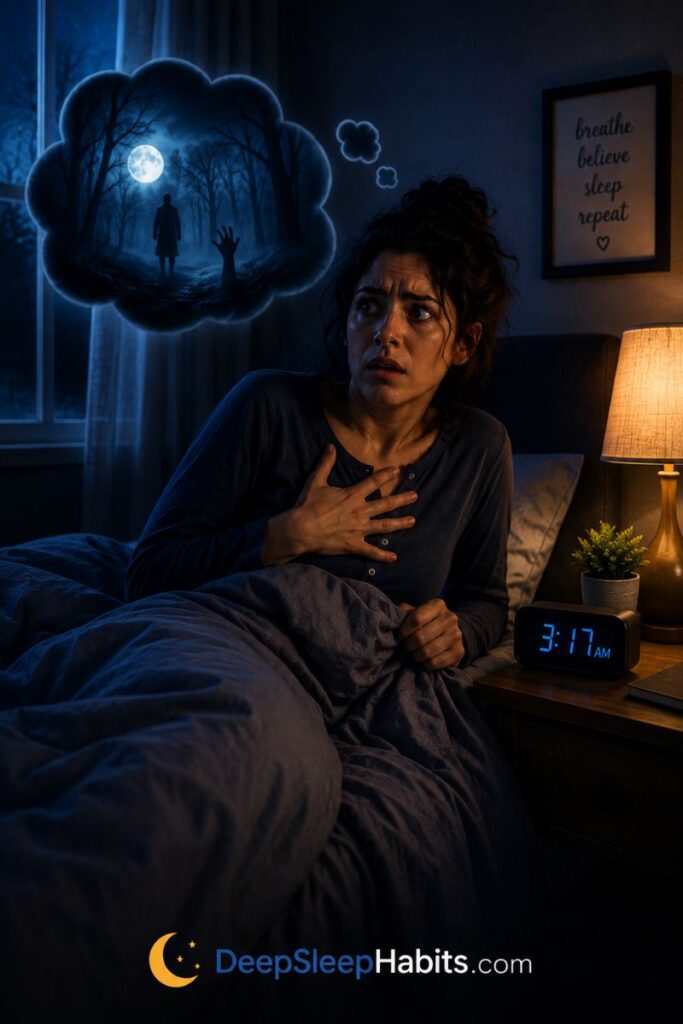
During REM sleep, the stage in which most dreaming occurs, your brain is highly active. Although your body remains relaxed, your mind can experience situations that feel incredibly real. When you suddenly wake up during or immediately after a vivid dream, your brain may need a few moments to recognize that the danger wasn’t real.
As a result, you might wake with a racing heart, rapid breathing, sweating, or an overwhelming sense of fear. Even if you can’t remember the dream itself, the emotional response can linger for several minutes after waking.
Nightmares are more common during periods of stress, after emotional events, certain medications, or when your sleep schedule has been disrupted. While an occasional frightening dream is completely normal, frequent nightmares may be worth discussing with a healthcare professional if they’re affecting your sleep or daily life.
Quick Tip
If you wake up frightened after a vivid dream, take a few slow, deep breaths and remind yourself that you’re safe. Avoid checking your phone or immediately turning on bright lights. Giving your brain a few quiet moments to settle can help reduce the lingering fear and make it easier to relax again.
2. Your Nervous System May Be Overreacting
If you wake up feeling scared at night, your nervous system may be reacting as though you’re in danger—even when you’re completely safe.
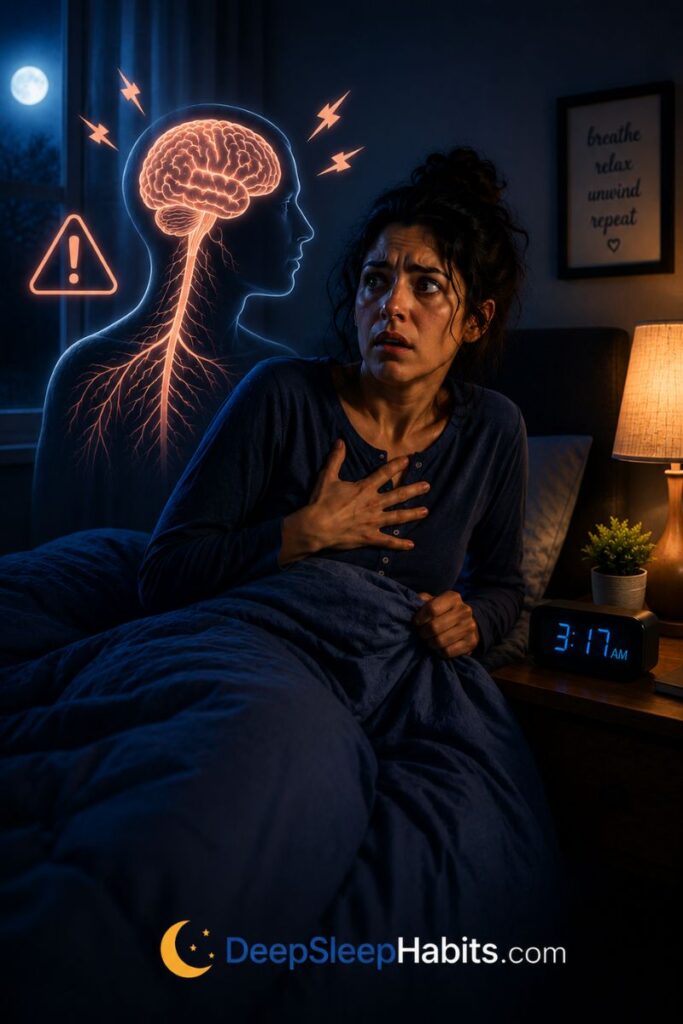
Your body is designed to protect you. When it detects a potential threat, it activates the fight-or-flight response, releasing hormones such as adrenaline and cortisol. These hormones increase your heart rate, speed up your breathing, and make you feel more alert so you can respond quickly.
Sometimes, however, this response is triggered even when no real danger exists. Stress, poor sleep, emotional exhaustion, or an overactive nervous system can make your body more sensitive, causing you to wake up suddenly with an intense feeling of fear or panic.
Many people describe this as waking up with a racing heart, shaky breathing, or a strong feeling that something is wrong—even though they can’t explain why. While these episodes can feel frightening, they’re often caused by your body’s alarm system becoming temporarily overactive rather than an actual emergency.
If you also wake up with anxiety during the night, our guide on Why Do I Wake Up With Anxiety at Night? explains how an overactive nervous system can contribute to these nighttime episodes.
Quick Tip
Try practicing calming breathing exercises before bed, such as inhaling for four seconds and exhaling for six seconds. Over time, relaxation techniques can help teach your nervous system that bedtime is a safe time to rest rather than remain on high alert.
3. Stress and Emotional Overload Can Follow You Into Sleep
If you wake up feeling scared at night, stress and emotional overload may be affecting your sleep more than you realize.
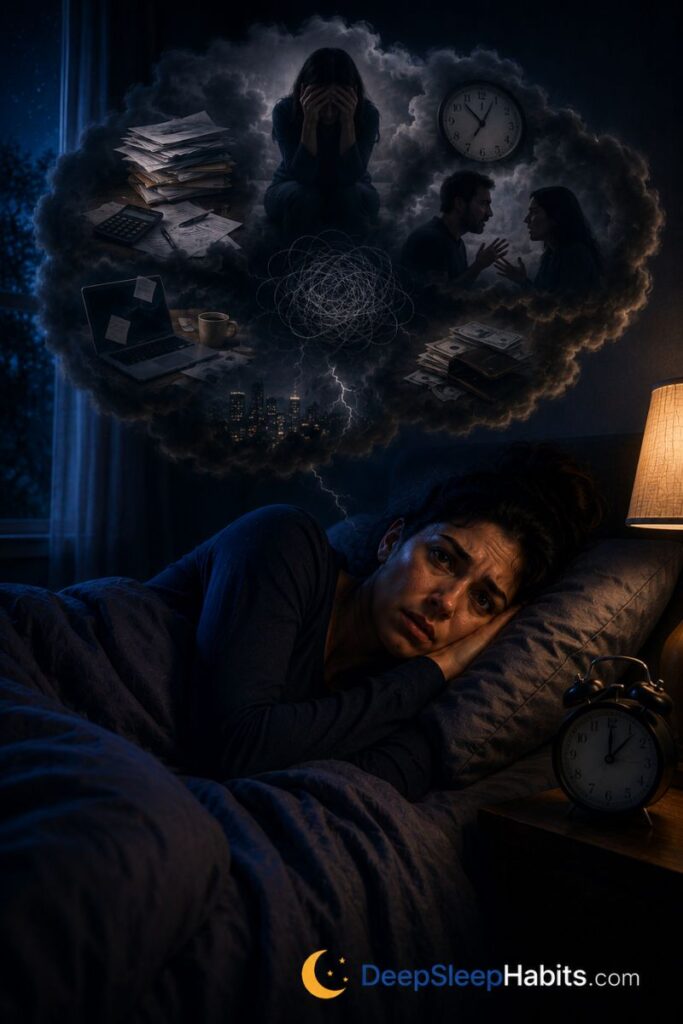
Even while you’re asleep, your brain continues to process emotions, memories, and stressful experiences from the day. If you’ve been dealing with work pressure, relationship problems, financial worries, or other emotional challenges, your brain may remain on high alert throughout the night.
When your stress levels stay elevated, your body produces more cortisol and other stress hormones. These hormones can make you wake up suddenly with a strong feeling of fear, panic, or uneasiness—even when there’s no immediate danger around you.
Over time, chronic stress can make your nervous system more sensitive. As a result, even a normal awakening between sleep cycles may trigger an exaggerated fear response, leaving you feeling frightened and unable to relax.
Quick Tip
Try creating a relaxing bedtime routine that helps your mind unwind before sleep. Reading a book, practicing gentle breathing exercises, or writing down tomorrow’s to-do list can help reduce stress and make nighttime awakenings feel less frightening.
4. Anxiety May Be Triggering Nighttime Fear
If you wake up feeling scared at night, anxiety may be one of the most common reasons.
Anxiety doesn’t simply disappear when you fall asleep. Your brain continues to process worries, emotions, and stressful thoughts throughout the night. In some people, this can trigger sudden awakenings accompanied by an intense feeling of fear, even when there’s no immediate danger.
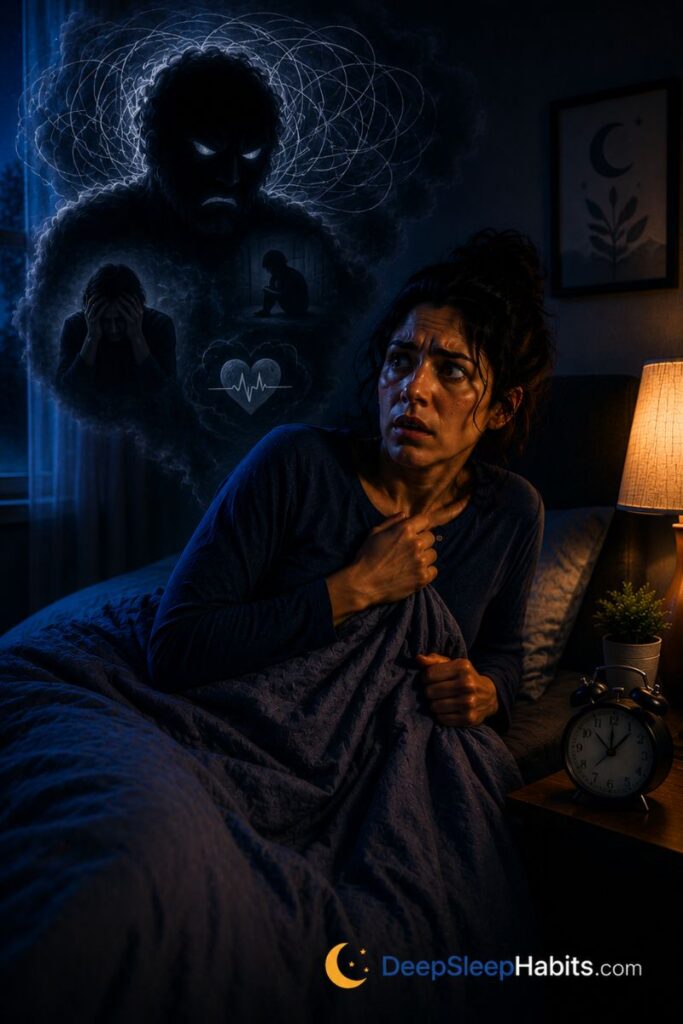
Unlike fear that’s caused by a nightmare, anxiety-related awakenings often occur without a clear reason. You may wake up feeling uneasy, restless, or convinced that something is wrong, even though you can’t identify a specific threat. These episodes can also be accompanied by a racing heart, rapid breathing, muscle tension, or a sense of panic.
Over time, anxiety can make your nervous system more sensitive, increasing the likelihood of waking up feeling frightened during the night. Learning how to manage anxiety during the day and creating a calming bedtime routine can help reduce these nighttime episodes.
Quick Tip
If anxiety wakes you during the night, remind yourself that the feeling will pass. Focus on slow, controlled breathing and avoid checking the time or reaching for your phone. Reducing stimulation can help your body return to a calmer state more quickly.
5. A Panic Attack May Wake You Up Feeling Scared
If you wake up feeling scared at night, you may have experienced a nocturnal panic attack.
Unlike panic attacks that happen during the day, nocturnal panic attacks occur while you’re asleep. Many people wake up suddenly with an overwhelming feeling of fear, even though there was no obvious trigger. The experience can be so intense that it feels like something is seriously wrong.
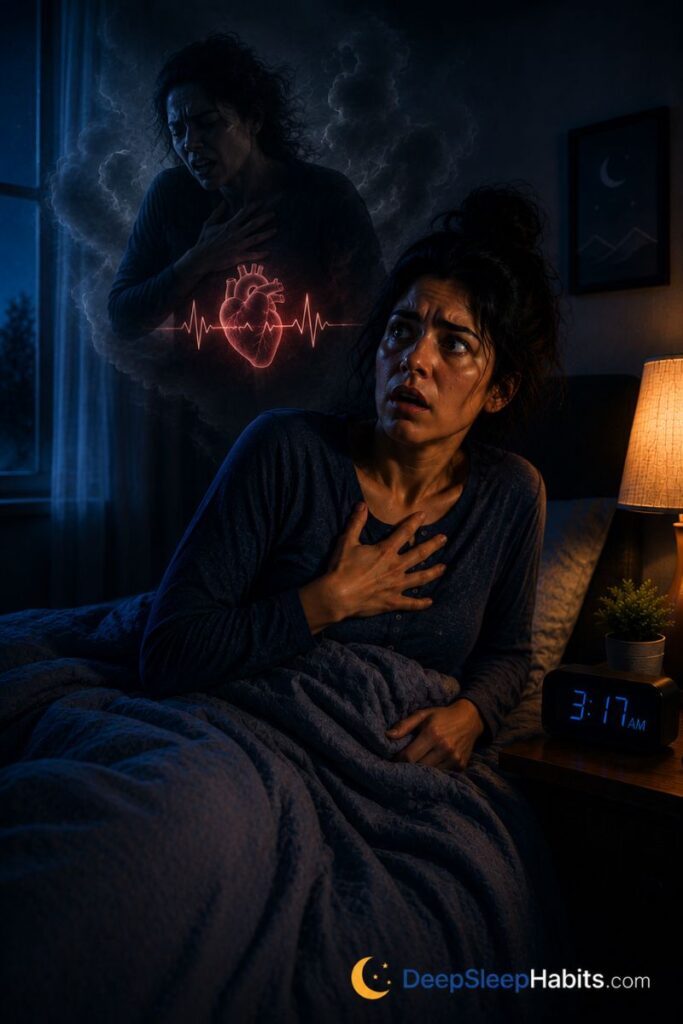
A nocturnal panic attack is often accompanied by physical symptoms such as a racing heart, rapid breathing, chest tightness, sweating, trembling, or dizziness. These symptoms are caused by a sudden surge of adrenaline, which activates your body’s natural fight-or-flight response.
Although nocturnal panic attacks can feel frightening, they usually aren’t dangerous. However, they can leave you feeling anxious about going back to sleep, increasing the likelihood of waking up feeling scared again in the future.
If you also wake up with a racing heart, our guide on Why Do I Wake Up With a Racing Heart? explains why these symptoms often occur together and what may be causing them
Quick Tip
If you think you’ve experienced a nocturnal panic attack, remind yourself that the episode will pass. Focus on slow, steady breathing and avoid jumping out of bed immediately. Once your breathing and heart rate begin to settle, your body can gradually return to a calmer state.
6. An Underlying Sleep Disorder May Be the Cause
If you wake up feeling scared at night on a regular basis, an underlying sleep disorder could be contributing to your symptoms.
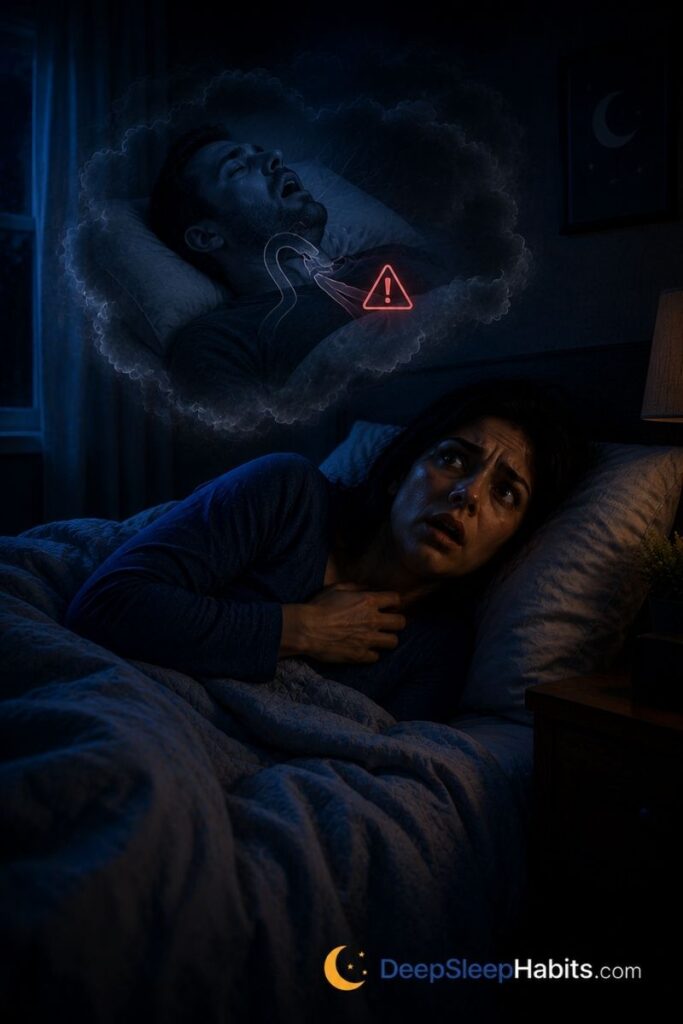
Conditions such as sleep apnea, night terrors, or certain forms of insomnia can interrupt your sleep and trigger sudden awakenings with an intense feeling of fear. In some cases, you may wake up confused, disoriented, or convinced that something is wrong before you fully realize you’re awake.
For example, people with sleep apnea may briefly stop breathing during sleep, causing the brain to trigger an emergency response. This sudden activation of the body’s fight-or-flight system can leave you waking up frightened, gasping for air, or with a racing heart.
Sleep disorders don’t always cause obvious symptoms during the day, which is why many people don’t realize they’re affecting their sleep. If these episodes happen frequently, or they’re accompanied by loud snoring, breathing pauses, or excessive daytime tiredness, it’s important to speak with a healthcare professional.
If you also wake up gasping for air, our guide on Why Do I Wake Up Gasping for Air at Night? explains how sleep apnea and other breathing-related sleep disorders may be involved.
Quick Tip
Keep a simple sleep diary for one or two weeks. Write down when you wake up, how you feel, and whether you notice symptoms such as snoring, gasping, or severe daytime fatigue. This information can help both you and your healthcare provider identify possible sleep disorders more easily.
7. An Underlying Medical Condition Could Be Contributing
If you wake up feeling scared at night on a regular basis, an underlying medical condition may also be playing a role.
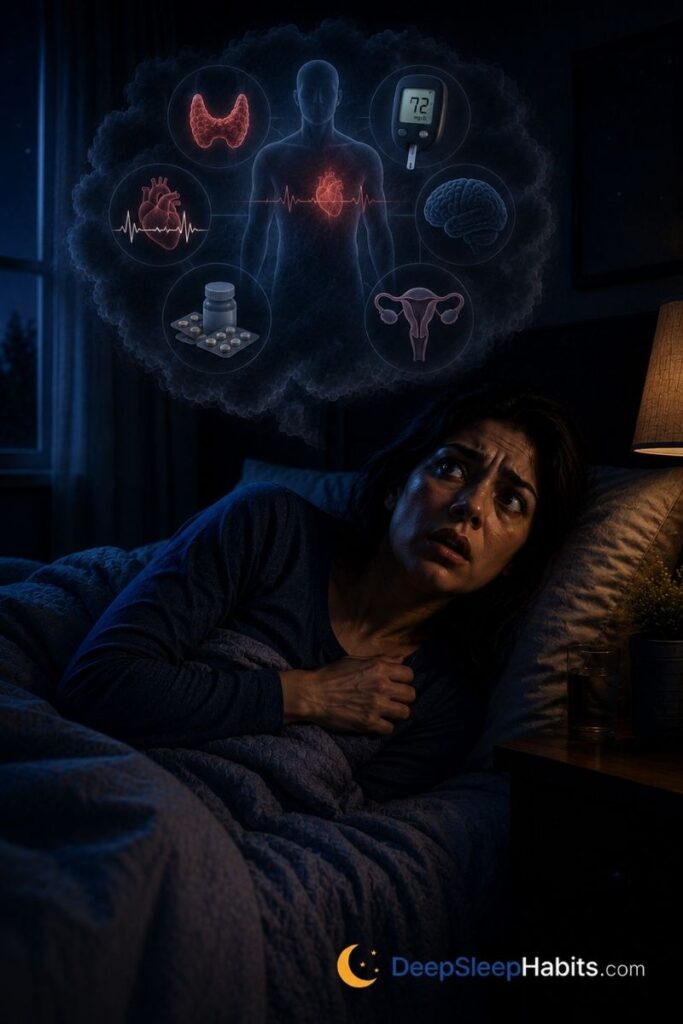
Your brain and body work closely together while you sleep. Certain health conditions can affect your breathing, heart rate, hormone levels, or nervous system, making you more likely to wake up suddenly with feelings of fear or panic.
For example, thyroid disorders, low blood sugar, heart rhythm problems, hormonal changes, and some medications may trigger physical symptoms that your brain interprets as a threat. Even if you’re unaware of what’s happening, your body’s natural alarm system can activate, causing you to wake up frightened.
In some cases, nighttime fear may also be linked to conditions such as sleep apnea, anxiety disorders, or other health issues that require medical evaluation. If these episodes become frequent, severe, or are accompanied by symptoms such as chest pain, difficulty breathing, fainting, or significant daytime fatigue, it’s important to seek medical advice
While waking up feeling scared once in a while is usually nothing to worry about, persistent episodes shouldn’t be ignored. Identifying and treating the underlying cause can often lead to better sleep and greater peace of mind.
Quick Tip
If you notice that you wake up feeling scared several times a week or your symptoms are becoming more intense, keep track of when they occur and any accompanying symptoms. Sharing this information with your healthcare provider can make it easier to identify possible underlying medical conditions.
How to Stop Waking Up Feeling Scared at Night
Waking up feeling scared at night can be frightening, but it doesn’t always mean something is seriously wrong. In many cases, simple lifestyle changes and healthy sleep habits can help reduce nighttime fear and make it easier for your body to feel safe during sleep.
The key is to address the underlying cause whenever possible. Whether your nighttime fear is linked to stress, anxiety, poor sleep habits, or an underlying health condition, taking small, consistent steps can make a meaningful difference over time.
Below are 7 science-backed strategies that may help you wake up feeling calmer and sleep more peacefully.
7 Science-Backed Tips to Reduce Nighttime Fear
1. Create a Relaxing Bedtime Routine
If you wake up feeling scared at night, creating a consistent bedtime routine is one of the most effective ways to help your mind and body feel safe before sleep.
Your brain thrives on routine. Going to bed and waking up at roughly the same time every day helps regulate your circadian rhythm, making it easier to fall asleep, stay asleep, and reduce nighttime awakenings. A predictable evening routine also signals to your nervous system that it’s time to relax rather than stay alert.
Simple activities such as reading a book, taking a warm shower, practicing gentle stretching, or listening to calming music can help lower stress levels before bed. If you’re looking for more practical ways to build healthy sleep habits, our guide on How to Sleep Better Naturally shares additional science-backed strategies to improve your overall sleep quality.
Remember, your bedtime routine doesn’t need to be perfect. The most effective routine is one that you can follow consistently, helping your body associate bedtime with relaxation instead of fear.
2. Practice Deep Breathing or Relaxation Techniques
If you wake up feeling scared at night, calming your nervous system can make it easier to relax and reduce feelings of fear.
When you’re frightened, your body automatically activates the fight-or-flight response. Your heart beats faster, your breathing becomes quicker, and your muscles tense up. Slow, controlled breathing sends the opposite message to your brain—that you’re safe and there’s no immediate danger.
Simple relaxation techniques such as deep breathing, progressive muscle relaxation, meditation, or mindfulness can help lower stress levels before bed and make nighttime awakenings feel less overwhelming. The more often you practice these techniques, the easier it becomes for your body to switch from a state of alertness to one of relaxation.
You don’t have to wait until you wake up feeling scared. Practicing relaxation exercises for just a few minutes before bed each night may help reduce nighttime fear and improve your overall sleep quality over time.
3. Manage Stress During the Day
If you wake up feeling scared at night, what happens during the day may be affecting your sleep more than you realize.
Stress doesn’t simply disappear when you go to bed. Your brain continues to process emotions, worries, and unfinished tasks while you sleep. If stress builds up throughout the day, your nervous system may remain on high alert during the night, increasing the likelihood of waking up feeling frightened.
Finding healthy ways to manage stress during the day can help reduce this nighttime alertness. Activities such as regular exercise, journaling, spending time outdoors, talking with someone you trust, or taking short breaks during a busy day can all help lower stress levels before bedtime.
Remember, you don’t have to eliminate every source of stress. Even small, consistent habits that help you unwind can make your mind and body feel calmer, making it easier to sleep more peacefully and wake up feeling less afraid.
4. Limit Caffeine and Alcohol Before Bed
If you wake up feeling scared at night, what you drink in the hours before bedtime may be affecting your sleep more than you realize.
Caffeine is a stimulant that can stay in your system for six hours or longer, making it harder for your brain and nervous system to fully relax. Even if you fall asleep without difficulty, caffeine may increase the likelihood of lighter sleep and nighttime awakenings.
Alcohol can also interfere with healthy sleep. While it may make you feel sleepy initially, it often disrupts the second half of the night by reducing sleep quality and increasing the chances of waking up suddenly. For some people, these awakenings may be accompanied by feelings of fear, anxiety, or a racing heart.
Choosing water or a caffeine-free herbal tea in the evening and avoiding alcohol close to bedtime may help your body maintain a more restful and stable sleep throughout the night.
5. Create a Safe and Comfortable Sleep Environment
If you wake up feeling scared at night, your bedroom environment may play a bigger role than you think.
Your brain is constantly taking in information from your surroundings, even while you sleep. A room that’s too bright, too noisy, too warm, or uncomfortable can make you more likely to wake up during the night. Once you’re awake, these distractions may make it harder to relax, causing feelings of fear or uneasiness to become even more noticeable.
Creating a bedroom that feels calm, quiet, and comfortable can help your brain associate your sleeping environment with safety and relaxation. Blackout curtains, a comfortable mattress and pillow, a cool room temperature, and minimizing unnecessary noise can all contribute to more restful sleep.
If your bedroom helps you feel secure and relaxed before you fall asleep, you’re also more likely to wake up feeling calm if you briefly awaken during the night.
6. Avoid Checking the Time or Your Phone
If you wake up feeling scared at night, your first instinct may be to check the time or reach for your phone. Unfortunately, this often makes it even harder to relax.
Seeing the time can quickly trigger anxious thoughts such as “I’ll only get a few more hours of sleep.” This added pressure can increase stress and make your brain even more alert. Looking at your phone can have a similar effect. Bright light, notifications, emails, or social media can stimulate your brain when it should be preparing to return to sleep.
Instead, try to keep the lights off and remind yourself that waking briefly during the night is normal. Focus on slow, steady breathing or another calming technique until you begin to feel relaxed again.
The less attention you give to being awake, the easier it often is for your body to settle down and naturally drift back to sleep.
7. Know When to Seek Professional Help
If you wake up feeling scared at night on a regular basis despite improving your sleep habits, it may be time to speak with a healthcare professional.
Occasional episodes of nighttime fear are usually nothing to worry about. However, if they happen several times a week, interfere with your sleep, or are accompanied by symptoms such as loud snoring, breathing pauses, chest pain, severe anxiety, or extreme daytime fatigue, it’s important to find out whether an underlying condition is contributing to your symptoms.
A doctor or sleep specialist can help identify possible sleep disorders, medical conditions, or mental health concerns that may be affecting your sleep. In many cases, treating the underlying cause can significantly reduce nighttime fear and improve both your sleep quality and overall well-being.
Remember, asking for help isn’t a sign of weakness. If your symptoms are persistent or getting worse, seeking professional advice is one of the most important steps you can take toward sleeping peacefully again.
When Should You See a Doctor?
Occasionally waking up feeling scared at night is usually nothing to worry about. Stress, a vivid dream, or a temporary disruption to your sleep can all cause you to wake feeling frightened from time to time.
However, if you regularly wake up feeling scared, or these episodes are becoming more frequent or intense, it’s a good idea to speak with a healthcare professional. Persistent nighttime fear may sometimes be linked to an underlying sleep disorder, anxiety disorder, or another medical condition that requires treatment.
You should also seek medical advice if your nighttime awakenings are accompanied by symptoms such as:
- Loud snoring or pauses in breathing during sleep
- Waking up gasping for air
- Chest pain or frequent heart palpitations
- Severe panic attacks or overwhelming anxiety
- Confusion or unusual behaviors during sleep
- Extreme daytime fatigue despite getting enough sleep
A healthcare provider can help determine whether your symptoms are related to a sleep disorder, an underlying medical condition, medication, or another factor affecting your sleep. Early diagnosis and treatment can often improve both your sleep quality and your overall well-being.
Remember, while occasional nighttime fear is common, persistent episodes shouldn’t be ignored. Getting the right support can help you sleep more peacefully and wake up feeling safe and well-rested.
Frequently Asked Questions
Why do I wake up feeling scared at night?
Waking up feeling scared at night is often caused by your body’s natural stress response becoming activated during sleep. Stress, anxiety, vivid dreams, panic attacks, sleep disorders, or certain medical conditions can all trigger sudden feelings of fear after waking. While occasional episodes are usually harmless, frequent nighttime fear may be a sign that an underlying issue should be addressed.
Is it normal to wake up feeling scared?
Yes. Most people experience occasional episodes of waking up feeling scared, especially during stressful periods or after a vivid dream. However, if it happens several times a week, interferes with your sleep, or is accompanied by symptoms such as gasping for air, chest pain, or severe anxiety, it’s worth speaking with a healthcare professional.
Can anxiety cause me to wake up feeling scared?
Yes. Anxiety is one of the most common reasons people wake up feeling scared at night. An overactive nervous system can trigger your body’s fight-or-flight response while you’re sleeping, causing you to wake up suddenly with feelings of fear, a racing heart, rapid breathing, or a sense that something is wrong, even when you’re safe.
How can I stop waking up feeling scared?
Improving your sleep habits, managing stress, practicing relaxation techniques, and maintaining a consistent bedtime routine can all help reduce nighttime fear. Creating a calm sleep environment and limiting caffeine or alcohol before bed may also improve your sleep quality. If your symptoms continue despite these changes, it’s a good idea to seek medical advice.
When should I see a doctor about waking up feeling scared
You should consider speaking with a healthcare professional if you wake up feeling scared several nights a week, if the episodes are becoming more frequent or severe, or if they’re accompanied by symptoms such as loud snoring, breathing pauses, chest pain, confusion, or extreme daytime fatigue. Identifying and treating the underlying cause can often lead to better sleep and improved overall health.
Final Thoughts
Waking up feeling scared at night can be an unsettling experience, especially if it happens without warning or for no obvious reason. While an occasional episode is usually nothing to worry about, frequent nighttime fear may be your body’s way of telling you that something needs attention.
The good news is that many of the common causes—such as stress, anxiety, an overactive nervous system, or poor sleep habits—can often be improved with small, consistent changes. Creating a calming bedtime routine, managing stress during the day, and understanding what may be triggering your nighttime awakenings can all help you feel more relaxed and confident at bedtime.
Remember, you don’t have to live with nighttime fear forever. By identifying the underlying cause and taking gradual steps to improve your sleep, you can wake up feeling calmer, safer, and more refreshed.
If you’re ready to take the next step toward better sleep, don’t forget to download our FREE Sleep Better Tonight Guide. It includes simple, science-backed strategies to help you sleep more peacefully and wake up feeling your best.