

Do you wake up feeling exhausted, even after what seemed like a full night of sleep?
Getting enough hours in bed doesn’t always mean you’re getting the restorative sleep your body needs. You may sleep for seven, eight, or even nine hours and still wake up feeling drained, sluggish, or as though you barely slept at all.
Sometimes the explanation is relatively simple, such as an inconsistent sleep schedule, stress, or repeatedly waking during the night. In other cases, waking up exhausted may be connected to poor sleep quality, sleep disorders, medications, or other health factors.
The important thing is to look beyond the number of hours you sleep and consider what may be interfering with the quality of your rest.
In this article, we’ll explore seven possible reasons you wake up feeling exhausted, what you can do to improve your sleep, and when persistent morning exhaustion may be worth discussing with a healthcare professional.
Want to Sleep Better Naturally?
Download the FREE Sleep Better Tonight Guide for simple nighttime habits that can help you build a calmer, more sleep-friendly evening routine.
Quick Answer
If you wake up feeling exhausted despite getting enough hours of sleep, poor sleep quality may be part of the problem. Stress, frequent nighttime awakenings, an inconsistent sleep schedule, alcohol, certain medications, or sleep disorders such as sleep apnea can all interfere with restorative sleep.
Occasionally waking up tired isn’t unusual. But if you’re regularly feeling exhausted after sleeping, especially when it’s affecting your mood, concentration, or ability to function during the day, it’s worth looking at what may be disrupting your sleep and discussing persistent symptoms with a healthcare professional.
7 Reasons You Wake Up Feeling Exhausted
If you’re getting enough hours of sleep but still waking up exhausted, the problem may be less about how long you sleep and more about what happens during the night.
Here are seven possible reasons you may not be waking up feeling as rested as you’d expect.
1. Your Sleep May Be More Fragmented Than You Realize
You can spend seven or eight hours in bed and still wake up feeling exhausted if your sleep is repeatedly interrupted during the night.

Your body naturally moves through different stages of sleep, including light sleep, deep sleep, and REM sleep. These stages repeat in cycles throughout the night and each plays a different role in physical recovery, memory, and how rested you feel the next day.
The problem is that sleep can become fragmented without you remembering every awakening. Noise, stress, discomfort, temperature changes, or brief periods of waking may repeatedly pull you into lighter sleep.
As a result, the number of hours on the clock may look perfectly normal while the quality of your sleep is much lower than you realize.
If you regularly wake up multiple times during the night, those repeated interruptions may help explain why you still feel drained in the morning.
Quick Tip
Instead of looking only at how many hours you sleep, pay attention to how often you wake up, how restless your sleep feels, and whether anything in your bedroom regularly disturbs you.
2. Stress and Anxiety May Keep Your Brain More Alert
Stress doesn’t automatically disappear when you fall asleep. If you’ve had a stressful day, you’re worrying about something, or your mind keeps racing at night, your brain may have a harder time fully settling down.

Stress and anxiety can increase mental and physical arousal, making it more difficult to fall asleep and contributing to lighter or more disrupted sleep during the night.
Your body’s stress-response system is also closely connected to your sleep-wake cycle. When you’re under ongoing stress, changes in alertness and stress hormones such as cortisol may be one of several factors affecting how well you sleep.
You might notice yourself tossing and turning, waking frequently, or having trouble switching your thoughts off. Some people also experience symptoms such as waking up with a racing heart when anxiety or stress is involved.
Even if you spend plenty of time in bed, disrupted sleep can leave you feeling exhausted after sleeping.
Quick Tip
Give your brain some time to slow down before bed. Try dimming the lights, putting your phone away, writing down lingering thoughts, or spending 10–20 minutes doing something calming before you try to sleep.
3. An Inconsistent Sleep Schedule Can Affect How Rested You Feel
Your body works best when your sleep and wake times follow a relatively consistent pattern. Going to bed and waking up at very different times can make it harder for your internal body clock to know when it’s time to feel sleepy and when it’s time to become alert.

This doesn’t mean your schedule needs to be perfect every single day. But frequently staying up much later, sleeping in for several hours, or constantly changing your bedtime may make your sleep feel less predictable.
An irregular schedule can also affect when you feel naturally tired or awake, which may contribute to waking up exhausted even when you technically spent enough hours in bed.
This is especially worth considering if you sleep at very different times on weekdays and weekends.
Quick Tip
Try keeping your wake-up time reasonably consistent, including on weekends. Morning daylight can also help reinforce your body’s natural sleep-wake rhythm and signal that it’s time to become more alert.
4. Your Sleep Environment May Be Disturbing Your Rest
Your bedroom can affect your sleep more than you might realize. Noise, light, temperature, and physical comfort can all influence how easily you stay asleep throughout the night.

Even when these disturbances don’t fully wake you, they may contribute to brief awakenings or lighter sleep. A bedroom that’s too warm, street noise outside, early morning light, or an uncomfortable mattress or pillow can all make restful sleep more difficult.
Some people are naturally more sensitive to their surroundings than others. If you’re a light sleeper, relatively small changes in your environment may be enough to disturb your sleep.
Over time, these repeated disruptions could help explain why you wake up feeling exhausted despite spending enough hours in bed.
Quick Tip
Keep your bedroom dark, quiet, and comfortably cool. If something regularly wakes or disturbs you, experiment with one change at a time — such as blackout curtains, reducing noise, or adjusting your bedroom temperature — and see whether your mornings improve.
5. Alcohol, Caffeine, or Late-Night Habits May Affect Sleep Quality
Some evening habits can interfere with sleep even when they don’t stop you from falling asleep.

Caffeine is an obvious example. Because its effects can last for several hours, coffee, energy drinks, cola, tea, chocolate, and some supplements consumed later in the day may make sleep lighter or make it harder to settle down at night.
Alcohol works differently. It may initially make you feel sleepy, but as your body processes it, sleep can become more fragmented later in the night.
Other habits — such as eating a large meal shortly before bed or spending a long time on stimulating screens — may also make it harder for some people to wind down comfortably.
If you regularly wake up exhausted after sleeping, your evening routine is worth looking at alongside the number of hours you spend in bed.
Quick Tip
Experiment with moving caffeine earlier in the day and limiting alcohol close to bedtime. Give yourself a calmer final hour before sleep and notice whether changing one evening habit at a time makes a difference.
6. Sleep Apnea or Another Sleep Disorder May Be Disrupting Your Sleep
Sometimes, waking up exhausted isn’t caused by your bedtime routine at all. An underlying sleep disorder can interfere with restorative sleep even when you spend enough hours in bed.
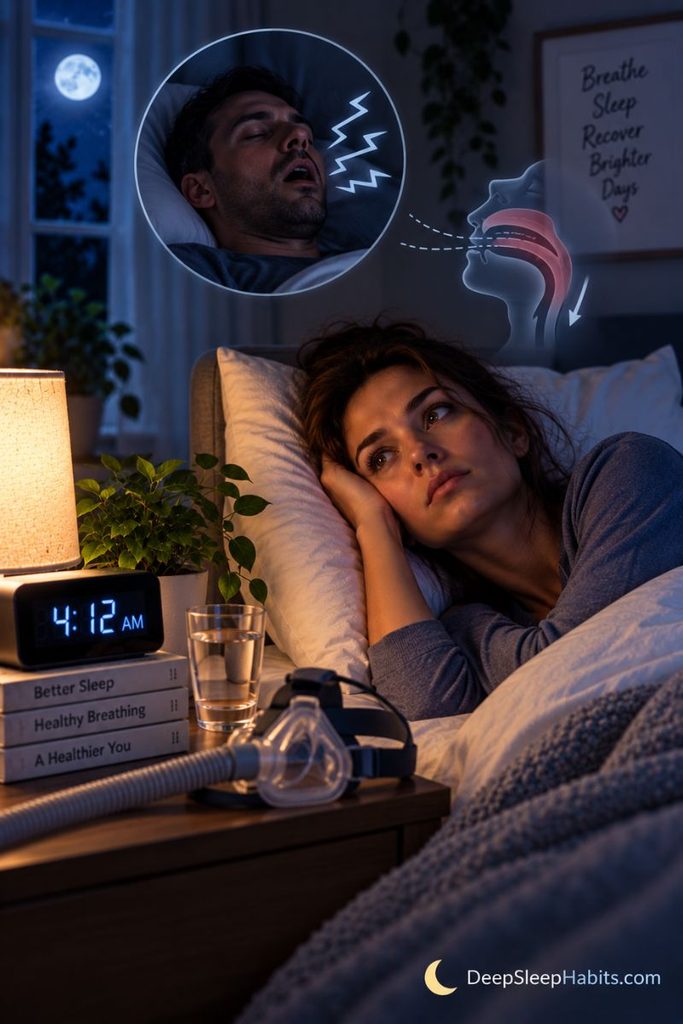
One example is sleep apnea, a condition in which breathing repeatedly stops and starts during sleep. These breathing disruptions can cause brief awakenings that you may not remember the next morning.
Possible signs can include loud snoring, gasping or choking during sleep, morning headaches, dry mouth, difficulty concentrating, and excessive daytime sleepiness. However, not everyone with sleep apnea experiences the same symptoms.
Other sleep disorders can also affect sleep quality and leave you feeling exhausted after sleeping.
Quick Tip
If you’re consistently exhausted despite getting enough sleep — especially if you snore loudly, wake up gasping, experience morning headaches, or struggle with significant daytime sleepiness — consider discussing your symptoms with a healthcare professional.
7. Medications or Other Health Factors May Be Contributing
Sometimes, the reason you wake up feeling exhausted may not be related to your sleep habits alone.

Certain medications can cause drowsiness, affect sleep, or leave some people feeling groggy the following morning. This can include some allergy medicines, sleep aids, antidepressants, and other prescription or over-the-counter medications. However, side effects vary depending on the medication and the person.
Persistent fatigue can also be associated with health conditions such as anemia, thyroid problems, diabetes, chronic pain, and other medical issues. That doesn’t mean one of these conditions is necessarily causing your exhaustion, but ongoing tiredness shouldn’t automatically be blamed on poor sleep.
If you’ve recently started or changed a medication, or you’re regularly waking up exhausted despite improving your sleep habits, it may be worth discussing what you’re experiencing with a healthcare professional.
Quick Tip
Don’t stop or change a prescribed medication on your own. If you think a medication may be affecting your sleep or morning energy, ask your doctor or pharmacist whether tiredness is a possible side effect and what options may be appropriate for you.
How to Stop Waking Up Feeling Exhausted
If you regularly wake up feeling exhausted, simply spending more time in bed may not solve the problem. Improving the quality and consistency of your sleep can be just as important as the number of hours you sleep.
The best place to start is with the factors you can control. Small changes to your sleep schedule, evening routine, bedroom, and daytime habits can all help create better conditions for restorative sleep.
If you’d like a simple routine to follow, download our FREE Sleep Better Tonight Guide for practical nighttime habits you can start using tonight.
Here are five practical places to start.
1. Keep Your Sleep Schedule More Consistent
Your body relies on an internal clock that helps regulate when you feel sleepy and when you become more alert.
Try going to bed and waking up at roughly the same times each day. Your schedule doesn’t need to be perfect, but regularly staying up much later or sleeping in for several extra hours can make your sleep-wake rhythm less consistent.
Getting natural light earlier in the day can also help support your body clock and reinforce the difference between daytime and nighttime.
Try This
Start with your wake-up time. Keeping that reasonably consistent may be easier than trying to force yourself to fall asleep at exactly the same time every night.
2. Give Your Brain Time to Wind Down
Your body can feel tired while your mind is still wide awake.
Stress, scrolling, work, worrying, or other stimulation close to bedtime can make it harder to mentally settle down. Creating a short transition between your day and sleep can help make bedtime feel less abrupt.
Try dimming the lights, putting your phone away, reading, taking a warm shower, listening to something calming, or writing down thoughts that keep circling in your mind.
If this sounds familiar, read Why Can’t My Brain Switch Off at Night? for more ways to calm an overactive mind before sleep.
Try This
Choose one calming activity and give yourself 15–30 minutes to unwind before bed rather than trying to create a complicated nighttime routine.
3. Make Your Bedroom More Sleep-Friendly
Your bedroom doesn’t need to be perfect, but it should make uninterrupted sleep as easy as possible.
Keep your room comfortably cool, dark, and quiet. Consider whether outside noise, early morning light, uncomfortable bedding, pets, or temperature changes regularly disturb your sleep.
If you wake during the night, try to avoid checking your phone whenever possible. Bright light and stimulating content can make it harder to settle back down.
Try This
Identify the one thing in your bedroom most likely to disturb you and change that first. Then give yourself several nights to see whether it makes a noticeable difference.
4. Look at Your Evening Food, Caffeine, and Alcohol Habits
What you eat and drink can also influence how comfortably you sleep.
Caffeine consumed later in the day may interfere with sleep for some people, while alcohol can make you sleepy initially but contribute to more fragmented sleep later in the night. Large or heavy meals close to bedtime may also cause discomfort for some people.
If you’re hungry before bed, you don’t necessarily need to avoid eating altogether. A smaller, lighter option may simply feel more comfortable.
For more ideas, see our guide to Foods and Drinks for Better Sleep: 16 Natural Options
Try This
Change one evening habit at a time — such as having your last caffeinated drink earlier — so you can actually tell whether it affects your sleep.
5. Track Your Sleep Patterns
When you’re feeling exhausted after sleeping, it can be difficult to figure out what’s happening based on one morning alone.
For a week or two, keep a simple record of when you went to bed and woke up, whether you remember waking during the night, your later caffeine or alcohol intake, and how rested you felt the next morning.
You may start noticing patterns — such as feeling worse after late nights, stressful evenings, alcohol, or repeatedly interrupted sleep.
A sleep diary can also give you useful information to discuss with a healthcare professional if your exhaustion continues.
Try This
Keep tracking simple. A few notes each morning are enough — you don’t need to monitor every minute of your sleep.
When Should You See A Doctor?
Waking up exhausted occasionally can happen, especially after a stressful period, a disrupted night, or a change in your normal sleep routine.
However, if you regularly wake up feeling exhausted despite giving yourself enough time to sleep, it’s worth discussing your symptoms with a healthcare professional — particularly if the exhaustion is persistent or interfering with your daily life.
Consider seeking medical advice if you also experience symptoms such as:
- Loud, frequent snoring
- Gasping, choking, or breathing difficulties during sleep
- Significant daytime sleepiness
- Frequent morning headaches
- Persistent dizziness or weakness
- Difficulty concentrating during the day
- Sleep problems that continue despite improving your sleep habits
Seek urgent medical care for symptoms such as severe difficulty breathing, chest pain, fainting, or other symptoms that feel sudden or serious.
A healthcare professional can help determine whether your exhaustion may be related to a sleep disorder, medication, another health condition, or something else that needs further evaluation.
FAQ About Waking Up Feeling Exhausted
Why do I wake up feeling exhausted every day?
If you wake up feeling exhausted every day despite getting enough hours of sleep, sleep quality may be part of the problem. Frequent awakenings, stress, an inconsistent sleep schedule, alcohol, certain medications, or an underlying sleep disorder can all affect how restorative your sleep feels. Persistent exhaustion can also have causes unrelated to sleep. If it continues or affects your daily life, consider discussing it with a healthcare professional.
Can anxiety make you wake up feeling exhausted?
Yes. Anxiety and ongoing stress can make it harder for your mind and body to fully settle at night. You may have trouble falling asleep, wake more frequently, or experience lighter, more restless sleep. Even when you don’t remember waking during the night, disrupted sleep can leave you mentally and physically drained the following morning. A calming wind-down routine may help, but persistent anxiety or sleep problems may need additional support.
Why am I exhausted even after sleeping?
Feeling exhausted after sleeping doesn’t necessarily mean you need more hours in bed. The quality and continuity of your sleep matter too. Noise, stress, alcohol, an uncomfortable bedroom, irregular sleep times, medications, or sleep disorders can all interfere with restful sleep. If you regularly get enough sleep but still feel exhausted, looking at both your sleep habits and other possible health factors can help identify what may be contributing.
Can poor sleep quality cause fatigue?
Yes. Repeatedly interrupted or poor-quality sleep can leave you tired during the day even when you spent plenty of time in bed. You may experience low energy, difficulty concentrating, irritability, or sleepiness. However, fatigue can have many possible causes, so ongoing or unexplained fatigue shouldn’t automatically be assumed to come from poor sleep alone.
How can I stop waking up feeling exhausted?
Start with the basics: keep a reasonably consistent sleep schedule, create time to wind down before bed, make your bedroom comfortable, and pay attention to caffeine, alcohol, and other evening habits. Tracking your sleep for a week or two may also reveal useful patterns. If you continue waking up exhausted despite getting enough sleep and improving your routine, talk with a healthcare professional about other possible causes.
Final Thoughts
If you regularly wake up feeling exhausted, getting more hours of sleep isn’t always the complete solution. The quality, timing, and continuity of your sleep can matter just as much as how long you spend in bed.
Stress, frequent nighttime awakenings, an inconsistent sleep schedule, your sleep environment, and certain evening habits can all influence how rested you feel the next morning.
Start with small changes you can realistically maintain. A more consistent sleep schedule, a calmer wind-down routine, and a bedroom that supports uninterrupted sleep are all good places to begin.
And remember: persistent exhaustion isn’t something you have to explain away as simply being tired. If you’re regularly waking up exhausted despite getting enough sleep and improving your sleep habits, consider discussing it with a healthcare professional.
Most importantly, don’t try to change everything at once. One small sleep-friendly habit repeated consistently can be more useful than a perfect routine you can’t maintain.