

Foods and drinks for better sleep may play a bigger role in your nighttime routine than you realize.
What you eat and drink throughout the day can influence your energy levels, digestion, alertness, and how comfortable you feel when it’s time to sleep. Certain foods for sleep contain nutrients involved in normal sleep-related processes, while some drinks and eating habits may make it harder to fall asleep or stay asleep throughout the night.
That doesn’t mean one specific food will suddenly fix your sleep. Instead, your overall diet, meal timing, caffeine intake, and evening habits can all work together to support — or disrupt — a healthy night’s rest.
In this article, you’ll discover 10 foods and drinks for better sleep, including several nighttime drinks for sleep, why they may be worth adding to your routine, and which evening eating and drinking habits could be working against you.
Want To Sleep Better Naturally?
Download the FREE Sleep Better Tonight Guide for simple nighttime habits that can help you build a calmer, more sleep-friendly evening routine.
You can also read: Sleep Better Naturally: 7 Simple Ways to Calm Your Body at Night
Why Food and Drinks Can Affect Your Sleep
What you eat and drink can influence several processes that are connected to sleep, including digestion, alertness, and your body’s natural sleep-wake rhythm.
Some foods for sleep contain nutrients such as magnesium, tryptophan, and certain vitamins that your body uses in processes involved in normal sleep. What you drink matters too. Caffeine can increase alertness, while alcohol may make you sleepy initially but contribute to more fragmented sleep later in the night.
The timing of your meals can also make a difference. Eating a large or heavy meal shortly before bed may cause digestive discomfort for some people, while going to bed hungry can make it difficult to relax and settle into sleep.
Rather than thinking of one food or drink as a sleep remedy, it helps to look at your overall evening routine. Choosing lighter nighttime options, being mindful of caffeine and alcohol, and experimenting with calming drinks for bed can all be part of a more sleep-friendly routine.
Sleep is influenced by much more than food alone. Stress, nighttime habits, and other factors can also contribute to waking up repeatedly during the night.
10 Foods for Better Sleep Naturally
No single food or drink can guarantee a better night’s sleep, but some contain nutrients that play a role in normal sleep-related processes. Others simply make practical evening choices because they’re light, comforting, or caffeine-free.
Here are 10 foods and drinks for better sleep that can fit naturally into a healthy nighttime routine.
1. Bananas
Bananas can be a simple evening snack when you want something light before bed. They provide nutrients including potassium, magnesium, and vitamin B6, as well as carbohydrates.

Vitamin B6 is involved in processes your body uses to produce neurotransmitters, while magnesium plays a role in normal muscle and nerve function. Bananas also contain small amounts of tryptophan, an amino acid involved in the body’s production of serotonin and melatonin.
That doesn’t mean eating a banana will make you fall asleep, but it can be a convenient alternative to heavier, highly processed, or caffeinated evening snacks.
Quick Tip
Try a small banana on its own or pair it with a little plain yogurt or oats if you tend to get hungry before bed.
2. Oats
Oats are another simple option for an evening snack, especially if you prefer something warm and filling.
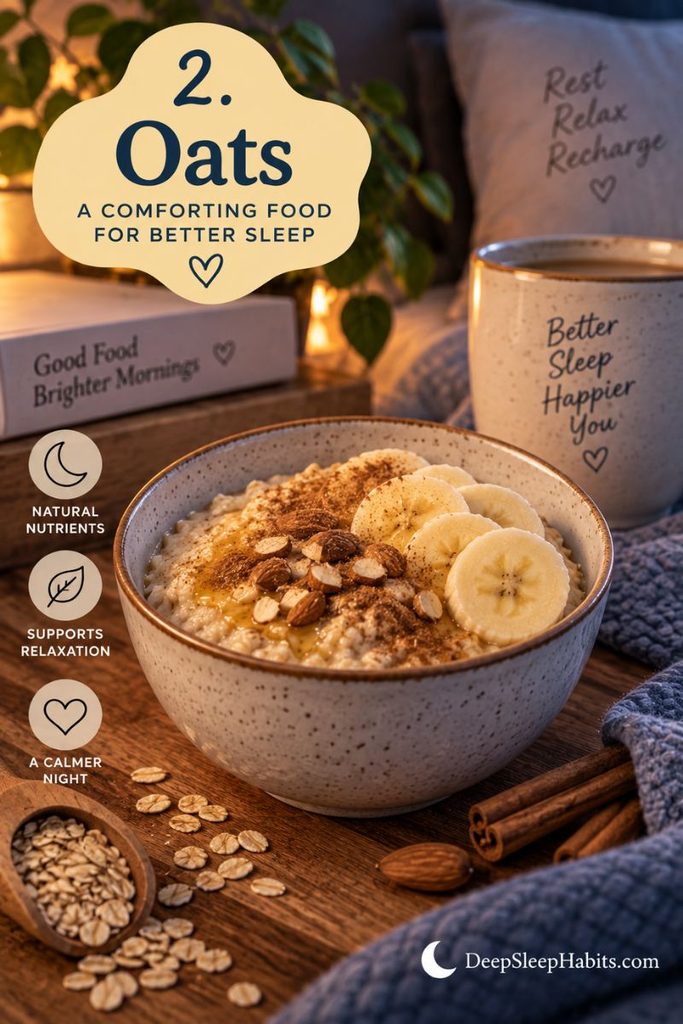
They provide complex carbohydrates, fiber, magnesium, and several B vitamins. Oats also contain small amounts of naturally occurring melatonin, although eating them shouldn’t be viewed as a substitute for your body’s normal melatonin production or as a treatment for sleep problems.
A small bowl of oatmeal can be a comforting nighttime choice, but keep the toppings simple. Large amounts of added sugar, chocolate, or other stimulating ingredients can turn a light snack into something much heavier before bed.
Quick Tip
Choose plain oats and add fruit, banana, or a small amount of nuts rather than loading your oatmeal with added sugar.
3. Almonds
Almonds are a nutrient-dense snack that provides magnesium, healthy fats, protein, and fiber.

Magnesium is involved in normal muscle and nerve function and has also been studied for its relationship with sleep. However, eating magnesium-rich foods such as almonds shouldn’t be viewed as a quick fix for insomnia or frequent nighttime awakenings.
A small portion of almonds can still be a practical evening snack because it’s filling without requiring a large meal close to bedtime.
Quick Tip
Keep the portion small and choose plain or lightly salted almonds rather than heavily flavored or sugar-coated varieties.
4. Kiwi
Kiwi is one of the more interesting foods for sleep because it has actually been studied in relation to sleep quality.

Kiwi contains nutrients and compounds including vitamin C, folate, antioxidants, and serotonin. Some small studies have found improvements in certain sleep measures when participants ate kiwi before bed, although more research is needed before we can say that kiwi directly improves sleep.
It’s also a relatively light evening snack, making it easy to include in a nighttime routine without eating a heavy meal close to bedtime.
Quick Tip
If you enjoy kiwi, try one or two as part of your evening snack and pay attention to whether it fits comfortably into your routine.
5. Yogurt
Plain yogurt can be a useful nighttime snack because it provides protein and calcium without necessarily being heavy.

Calcium is involved in several normal processes within the body, while the protein in yogurt can make it more satisfying than a sugary evening snack. Pairing plain yogurt with oats, banana, kiwi, or a few nuts can also create a more balanced option when you’re genuinely hungry before bed.
The type of yogurt matters. Some flavored varieties contain a significant amount of added sugar, so checking the label can be worthwhile.
Quick Tip
Choose plain or lower-sugar yogurt and add your own fruit or nuts for flavor.
6. Tart Cherries
Tart cherries are particularly interesting because they naturally contain melatonin, a hormone involved in regulating your sleep-wake cycle.

Tart cherry juice has been studied for its potential effects on sleep, and some research suggests it may modestly improve certain sleep measures in some people. However, the evidence is still limited, and tart cherry juice shouldn’t be treated as a cure for sleep problems.
If you enjoy it, tart cherry juice can be one of the nighttime drinks for sleep you experiment with as part of your evening routine.
Quick Tip
Look for unsweetened or lower-added-sugar tart cherry juice and keep portions moderate.
7. Walnuts
Walnuts provide healthy unsaturated fats, protein, fiber, magnesium, and small amounts of naturally occurring melatonin.

While that makes them an interesting addition to a sleep-friendly diet, there isn’t strong evidence that a handful of walnuts before bed will directly make you sleep better.
Their combination of protein, fat, and fiber does make walnuts a satisfying alternative to highly processed or sugary nighttime snacks when you’re genuinely hungry.
Quick Tip
A small handful is plenty. You can also combine walnuts with plain yogurt or oats for a simple evening snack.
8. Honey
Honey is often associated with bedtime drinks, but there’s limited evidence that honey itself directly improves sleep.

Its biggest advantage may simply be practical: a small amount can make caffeine-free tea or warm milk more enjoyable, which may help you stick with a relaxing nighttime routine.
Honey is still a source of added sugar, so more isn’t necessarily better. A small amount is enough if you’re using it to sweeten one of your favorite calming drinks for bed.
Quick Tip
Try a teaspoon of honey in a caffeine-free evening drink rather than turning it into a high-sugar bedtime snack.
9. Spinach
Spinach provides magnesium, folate, potassium, and other micronutrients that contribute to a balanced diet.

Magnesium is involved in normal nerve and muscle function and has been studied for its potential relationship with sleep. But, as with almonds, eating spinach isn’t likely to have an immediate sedative effect.
Spinach makes more sense as a regular part of your diet than as something you specifically need to eat right before bed. Adding magnesium-rich foods throughout the day is a more realistic approach than relying on one nighttime food to improve your sleep.
Quick Tip
Add spinach to dinner, soups, omelets, or salads rather than feeling that you need to eat it as a bedtime snack.
10. Fatty Fish
Fatty fish such as salmon, sardines, and mackerel provide omega-3 fatty acids and vitamin D, both of which have been studied in relation to sleep and overall health.

Some research has found associations between omega-3 intake, vitamin D status, and aspects of sleep quality, but that doesn’t mean eating salmon at dinner will directly make you sleepy.
Think of fatty fish as part of an overall nutrient-rich diet rather than a bedtime remedy. Including it regularly in your meals may support general health while providing nutrients that are involved in many processes throughout the body.
Quick Tip
Choose grilled or baked fish with a lighter side rather than a very heavy meal close to bedtime.
6 Drinks That May Help You Relax Before Bed
A calming evening drink can be a simple way to make your bedtime routine feel more relaxing. While no drink can guarantee better sleep, choosing something caffeine-free and comforting may help you slow down and prepare for the night.
Some nighttime drinks for sleep contain naturally occurring compounds that have been studied for their potential relationship with sleep, while others are helpful mainly because they create a relaxing bedtime ritual.
Here are six calming drinks for bed you may want to try.
1. Chamomile Tea
Chamomile tea is one of the most popular caffeine-free drinks associated with relaxation and bedtime.

Chamomile contains an antioxidant called apigenin, which interacts with certain receptors in the brain involved in relaxation and sleepiness. Research into chamomile and sleep has shown some promising results, although the evidence isn’t strong enough to consider chamomile a treatment for insomnia.
Still, drinking a warm cup of chamomile tea can be an easy way to slow down and create a consistent nighttime routine.
Quick Tip
Choose caffeine-free chamomile tea and drink it early enough that the extra liquid doesn’t have you waking up to use the bathroom.
2. Warm Milk
Warm milk has traditionally been used as a comforting bedtime drink for generations.
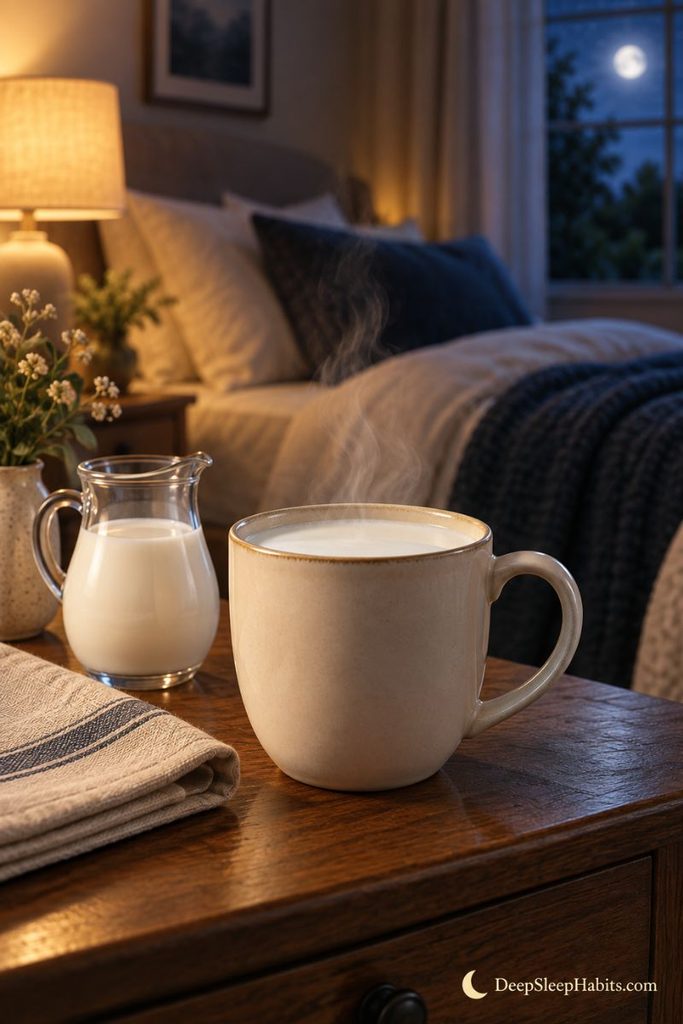
Milk contains tryptophan, an amino acid your body uses in processes involved in producing serotonin and melatonin. However, drinking a glass of milk shouldn’t be expected to have the same effect as a sleep aid.
For many people, the benefit may simply come from the comforting ritual of having something warm and familiar before bed.
Quick Tip
If milk agrees with your digestion, keep it simple and avoid adding large amounts of sugar, chocolate, or other stimulating ingredients.
3. Tart Cherry Juice
Tart cherry juice is one of the more interesting nighttime drinks for sleep because tart cherries naturally contain small amounts of melatonin, a hormone involved in regulating your sleep-wake cycle.

Small studies have investigated tart cherry juice for its potential effects on sleep, with some finding modest improvements in certain sleep measures. However, research is still limited, so it shouldn’t be viewed as a treatment for ongoing sleep problems.
A small serving can still be an easy option to experiment with as part of your evening routine.
Quick Tip
Look for unsweetened or lower-added-sugar tart cherry juice and keep your serving moderate.
4. Herbal Tea
Caffeine-free herbal tea can be another comforting addition to your bedtime routine.

Herbs such as lemon balm, lavender, and passionflower are commonly found in nighttime tea blends and have been studied for their potential calming effects. Research varies depending on the individual herb, so herbal teas shouldn’t be considered a treatment for insomnia.
The ritual itself can also be useful. Preparing a warm drink and sitting quietly for a few minutes can create a natural transition between a busy day and bedtime.
Quick Tip
Check the ingredients carefully when choosing a nighttime tea blend. Make sure it’s caffeine-free, and avoid drinking a large amount immediately before going to bed.
5. Magnesium Drinks
Magnesium is an essential mineral involved in normal muscle and nerve function, and researchers have also studied its possible relationship with sleep.

Magnesium drinks and powders have become popular additions to nighttime routines, but they’re not a guaranteed solution for poor sleep. Research into magnesium supplementation and sleep is still mixed, and whether supplementation is useful can depend on individual circumstances.
Magnesium is also naturally available in foods such as nuts, seeds, whole grains, and leafy green vegetables, so supplements aren’t the only way to include it in your diet.
Quick Tip
If you’re considering a magnesium supplement or powder, follow the recommended dosage and speak with a healthcare professional if you take medication, have a medical condition, or aren’t sure whether it’s appropriate for you.
6. Golden Milk
Golden milk is a warm drink typically made with milk or a plant-based alternative, turmeric, and spices such as cinnamon or ginger.

Although turmeric is associated with a variety of potential health benefits, there isn’t strong evidence that golden milk itself directly improves sleep. Its appeal before bed may be much simpler: it’s warm, caffeine-free, and comforting.
Preparing the same relaxing drink each evening can also become part of a consistent wind-down routine that signals it’s time to slow down for the night.
Quick Tip
Keep your golden milk relatively simple and avoid adding large amounts of sugar before bed.
What to Avoid Eating and Drinking Before Bed
Choosing foods and drinks for better sleep is only part of creating a sleep-friendly evening routine. What you consume before bed — and especially when you consume it — can also influence how easily you settle down and how comfortably you sleep.
You don’t need a long list of strict nighttime food rules. Instead, it can help to pay attention to a few common habits that may interfere with sleep and see which ones make a difference for you.
Caffeine Too Late in the Day
Caffeine increases alertness, which is useful during the day but less helpful when you’re trying to wind down for sleep. And coffee isn’t the only source. Tea, cola, energy drinks, chocolate, and some supplements or medications may also contain caffeine.
Because caffeine can remain in your system for several hours, an afternoon or evening dose may still affect you at bedtime. Some people are much more sensitive than others, so experiment with moving your last caffeinated drink earlier and see whether falling or staying asleep becomes easier.
Heavy Meals Close to Bedtime
Eating a large or heavy meal shortly before lying down can leave some people feeling uncomfortably full, bloated, or affected by heartburn or reflux. Those symptoms can make it harder to settle comfortably and may disturb sleep later in the night.
That doesn’t mean you should go to bed hungry. If you’re genuinely hungry in the evening, choose a smaller snack rather than another large meal. Some of the foods above — such as plain yogurt, banana, oats, or a small portion of nuts — can be simple options.
Alcohol Before Bed
Alcohol can be deceptive when it comes to sleep. It may make you feel sleepy and help you fall asleep faster, but that doesn’t necessarily mean you’ll get better-quality sleep.
As your body processes alcohol during the night, your sleep may become more fragmented and you may wake more easily. Alcohol can also worsen snoring and sleep-related breathing problems in some people. If you frequently wake during the night, try comparing your sleep on evenings with and without alcohol to see whether there’s a noticeable difference.
Too Much Liquid Late at Night
Hydration matters, but trying to catch up on all your fluids shortly before bedtime can create another problem: waking up because you need to use the bathroom.
Instead of drinking several glasses of water late in the evening, aim to stay adequately hydrated throughout the day. You don’t need to avoid drinking altogether before bed — especially if you’re thirsty — but reducing large amounts of liquid close to bedtime may help if bathroom trips regularly interrupt your sleep.
Added Sugar and Very Sugary Snacks
There’s no need to treat sugar as something that’s completely forbidden before bed. However, highly sugary foods and drinks may not be the most satisfying choice when you’re genuinely hungry late at night.
Cookies, candy, sweetened drinks, and desserts can also add a significant amount of sugar without providing much protein or fiber. A more balanced evening snack — such as plain yogurt with fruit, oats, or a small handful of nuts — may be a more practical choice when you need something before bed.
FAQ About Foods and Drinks for Better Sleep
What foods may help you sleep better naturally?
Some foods for sleep contain nutrients involved in normal processes related to sleep and relaxation. Examples include kiwi, oats, bananas, almonds, walnuts, yogurt, tart cherries, and fatty fish.
Kiwi and tart cherries are particularly interesting because they have been studied for their potential relationship with sleep. However, no individual food can guarantee better sleep. Think of these foods as part of an overall healthy diet and sleep-friendly routine rather than natural sleeping remedies.
What drinks may help you relax before bed?
Popular nighttime drinks for sleep include chamomile tea, caffeine-free herbal tea, warm milk, tart cherry juice, magnesium drinks, and golden milk.
Some contain compounds that have been studied in relation to sleep, while others may simply provide a warm, comforting ritual that helps you wind down before bedtime. Whichever drink you choose, keep caffeine, added sugar, and portion size in mind — especially if drinking too much before bed causes you to wake up for the bathroom.
Can food affect sleep quality?
Yes, what and when you eat can influence factors that affect sleep, including digestion, alertness, and how comfortable you feel when you go to bed.
For example, a large meal shortly before lying down may cause digestive discomfort or reflux in some people, while caffeine later in the day can interfere with sleep. Your overall eating pattern matters much more than any single so-called “sleep food,” so improving your diet should be viewed as one part of a broader approach to healthy sleep.
What foods and drinks should you avoid before bed?
There isn’t one universal list of foods everyone needs to avoid. However, caffeine, alcohol, large or heavy meals, highly sugary snacks, and excessive amounts of liquid close to bedtime may interfere with sleep for some people.
Pay attention to your own patterns. If you repeatedly sleep poorly after a particular food or drink, changing its portion size or timing can help you determine whether it’s contributing to the problem.
Is it bad to eat late at night before sleep?
Eating before bed isn’t automatically bad. What matters is what you eat, how much you eat, and how your body responds to it.
Large or heavy meals shortly before lying down may cause fullness, heartburn, or digestive discomfort, while going to bed very hungry can also make it difficult for some people to settle. If you need something in the evening, a smaller snack such as plain yogurt with fruit, oats, a banana, or a small portion of nuts may be more comfortable than a full meal.
Final Thoughts
The foods and drinks you choose can be one small piece of a much bigger sleep puzzle. While no individual food or bedtime drink can guarantee better sleep, your overall eating habits can influence factors such as digestion, alertness, and how comfortable you feel at night.
Rather than searching for one perfect sleep food, focus on patterns that work for you. A lighter evening snack, less caffeine later in the day, or one of the calming drinks for bed may be simple changes worth experimenting with.
Most importantly, remember that nutrition works alongside other healthy sleep habits. A consistent sleep schedule, a comfortable bedroom, and giving yourself time to unwind before bed all matter too.
If you want to take the next step, read How to Sleep Better Naturally: 7 Simple Ways to Calm Your Body at Night for more practical ways to build a healthier nighttime routine.
Small changes won’t transform your sleep overnight, but consistent habits can help create better conditions for a more restful night.
Pingback: Why Do I Wake Up Multiple Times At Night? (9 Causes + Fixes)