

What is deep sleep, and why is it so important for your body and brain? If you’ve ever slept for eight hours but still woke up feeling exhausted, the problem may not be how long you slept—it could be that you weren’t getting enough deep sleep.
Deep sleep is the most restorative stage of the sleep cycle. During this time, your body repairs tissues, restores energy, strengthens your immune system, and helps your brain process memories. Without enough deep sleep, you may wake up feeling tired, mentally foggy, or simply not refreshed, even after what seemed like a full night’s sleep.
Want to sleep more deeply and wake up feeling refreshed? Download our Free Sleep Better Tonight Guide for practical, science-backed tips to improve your sleep naturally.
If you often wake up feeling tired even after a full night’s sleep, you may also enjoy our guide on why you wake up feeling exhausted, where we explain some of the most common reasons you still feel drained in the morning.
In this guide, you’ll learn what deep sleep is, why it’s essential for your health, how much you need, what can reduce it, and practical ways to naturally get more deep sleep.
Quick Answer
Deep sleep is the deepest stage of non-REM sleep and the most restorative part of your sleep cycle. During this stage, your body repairs muscles and tissues, strengthens the immune system, restores energy, and supports memory and brain function. Most healthy adults spend about 13–23% of their total sleep time in deep sleep, although this naturally decreases with age.
Not getting enough deep sleep can leave you waking up feeling tired, groggy, or unfocused, even after sleeping for seven to nine hours. Stress, alcohol, caffeine, poor sleep habits, certain medications, and some medical conditions can all reduce deep sleep. Fortunately, maintaining a consistent sleep schedule, improving your sleep environment, and following healthy sleep habits can help increase deep sleep naturally.
What Is Deep Sleep?
Deep sleep is the deepest stage of non-rapid eye movement (non-REM) sleep, also known as slow-wave sleep (SWS). During this stage, your brain waves slow down significantly, your muscles relax, your heart rate and breathing become steady, and your body enters its most restorative state.
Unlike light sleep or REM sleep, deep sleep is when your body focuses on physical recovery. It repairs muscles and tissues, releases growth hormone, strengthens your immune system, and replenishes energy stores. At the same time, your brain organizes memories and clears away waste products that build up throughout the day.
Because your body is in such a deeply relaxed state, it can be difficult to wake someone during deep sleep. If you do wake up, you may feel groggy, confused, or disoriented for several minutes—a feeling known as sleep inertia.
Most deep sleep occurs during the first half of the night, especially in the first few sleep cycles. As the night goes on, your body gradually spends less time in deep sleep and more time in REM sleep, which plays a larger role in dreaming and emotional processing.
Why Is Deep Sleep Important?
Deep sleep is essential because it’s the stage of sleep where your body and brain do most of their repair and recovery. While you sleep, your body isn’t simply “resting”—it’s actively restoring itself so you can function at your best the next day
Without enough deep sleep, you may wake up feeling tired, struggle to concentrate, feel more emotional, or notice that your body takes longer to recover from physical activity. Over time, consistently missing out on deep sleep may also affect your overall health.
Here are some of the most important benefits of deep sleep:
Your Body Repairs and Recovers
One of the most important reasons deep sleep matters is because it’s when your body performs most of its physical repair work. Throughout the day, your muscles, tissues, and cells experience small amounts of wear and tear from activities like walking, exercising, working, or simply going about your daily routine.

During deep sleep, your body shifts its focus from staying active to repairing itself. It produces more growth hormone, which plays a key role in rebuilding muscle tissue, repairing cells, supporting healthy bones, and helping your body recover from physical stress. This is why getting enough deep sleep is especially important after exercise, illness, or injury.
Deep sleep also helps restore your body’s energy reserves. Instead of using energy for movement or mental activity, your body can direct those resources toward healing and recovery. If you regularly miss out on deep sleep, you may notice that your muscles stay sore longer, your body feels more fatigued, or you simply don’t feel physically refreshed when you wake up.
Your Brain Processes Memories and Learning
Deep sleep doesn’t just help your body recover—it also plays a crucial role in keeping your brain healthy. Throughout the day, your brain constantly collects new information, learns new skills, and processes countless experiences.

During deep sleep, much of that information is sorted, organized, and transferred into long-term memory. This process helps strengthen what you’ve learned while removing unnecessary information that your brain no longer needs. Scientists believe this is one of the reasons why getting enough sleep can improve learning, memory, and problem-solving abilities.
Deep sleep also allows your brain to recover from mental fatigue. Many people notice that after a poor night’s sleep they struggle to concentrate, forget simple things, or find it harder to stay focused. That’s partly because the brain hasn’t had enough time to complete its overnight recovery process.
Your Immune System Gets Stronger
Your immune system works around the clock to protect your body from viruses, bacteria, and other harmful invaders. Deep sleep gives your immune system valuable time to strengthen these natural defenses.

While you’re sleeping, your body produces proteins called cytokines, which help regulate inflammation and support your immune response. At the same time, your immune cells communicate more effectively, preparing your body to recognize and fight infections.
If you consistently get too little deep sleep, your immune system may not function as efficiently. Over time, this can make you more vulnerable to common illnesses and may even slow your recovery when you do get sick.
Your Energy Levels are Restored
Have you ever slept for eight hours but still felt exhausted the next morning? In many cases, the problem isn’t the amount of sleep—it’s the quality of your sleep, especially the amount of deep sleep you get.

Deep sleep is the stage where your body restores its energy reserves. Your heart rate slows, your breathing becomes more regular, and your body can focus on recovery instead of staying alert. This allows you to wake up feeling refreshed and ready for the day ahead.
If your deep sleep is repeatedly interrupted by stress, noise, alcohol, or frequent awakenings, you may never reach the level of restoration your body needs. As a result, you might wake up feeling drained even after spending plenty of time in bed.
Your Heart and Overall Health Benefit
Deep sleep is also important for your long-term health. During this stage of sleep, your heart rate, breathing, and blood pressure naturally decrease, giving your cardiovascular system an opportunity to recover from the demands of the day.

Researchers have found that consistently getting enough high-quality sleep is linked to better heart health, healthier blood pressure, improved blood sugar regulation, and overall physical well-being. While many factors influence long-term health, getting enough deep sleep is considered an important part of maintaining a healthy body.
Deep sleep also works together with the other stages of sleep to support your emotional well-being, hormone balance, and overall quality of life. That’s why improving your deep sleep can have benefits that extend far beyond simply feeling less tired in the morning.
How Much Deep Sleep Do You Need?
The amount of deep sleep you need isn’t measured by hours alone. Instead, sleep experts usually look at the percentage of your total sleep spent in deep sleep. The exact amount varies depending on your age, overall health, and the quality of your sleep.
Most healthy adults spend around 13–23% of their total sleep time in deep sleep. For someone who sleeps eight hours per night, that typically equals one to two hours of deep sleep. However, it’s important to remember that this is only an average. Some nights you may get slightly more or less deep sleep without it being a cause for concern.
As you get older, the amount of deep sleep you naturally experience gradually decreases. Babies, children, and teenagers spend much more time in deep sleep because their bodies and brains are still growing and developing. Adults still rely on deep sleep for physical recovery, memory, and immune function, but the percentage slowly declines with age.
It’s also worth remembering that sleep quality matters just as much as sleep duration. You might spend eight or even nine hours in bed, but if your sleep is frequently interrupted by stress, noise, alcohol, or an inconsistent sleep schedule, you may not get enough deep sleep to wake up feeling fully refreshed.
you regularly wake up feeling tired despite sleeping enough hours, it may be a sign that you’re not spending enough time in the restorative stages of sleep.
Want to improve your sleep quality naturally? Read our guide on Sleep Better Naturally for practical habits that may help you sleep deeper.
What Can Reduce Deep Sleep?
Even if you spend enough hours in bed, you may still not get the deep sleep your body needs. Several factors can interfere with your ability to reach or stay in the deepest stages of sleep.
Some of these factors are a natural part of aging, while others are related to your lifestyle, environment, or overall health. The good news is that many of them can be improved with small, consistent changes to your daily habits.
Below are some of the most common reasons why deep sleep may be reduced.
1. Aging Naturally Reduces Deep Sleep
One of the most common changes that happens as we get older is a gradual decline in deep sleep. While babies, children, and teenagers spend a large portion of the night in deep sleep to support growth and development, adults naturally begin to spend less time in this restorative stage as they age.
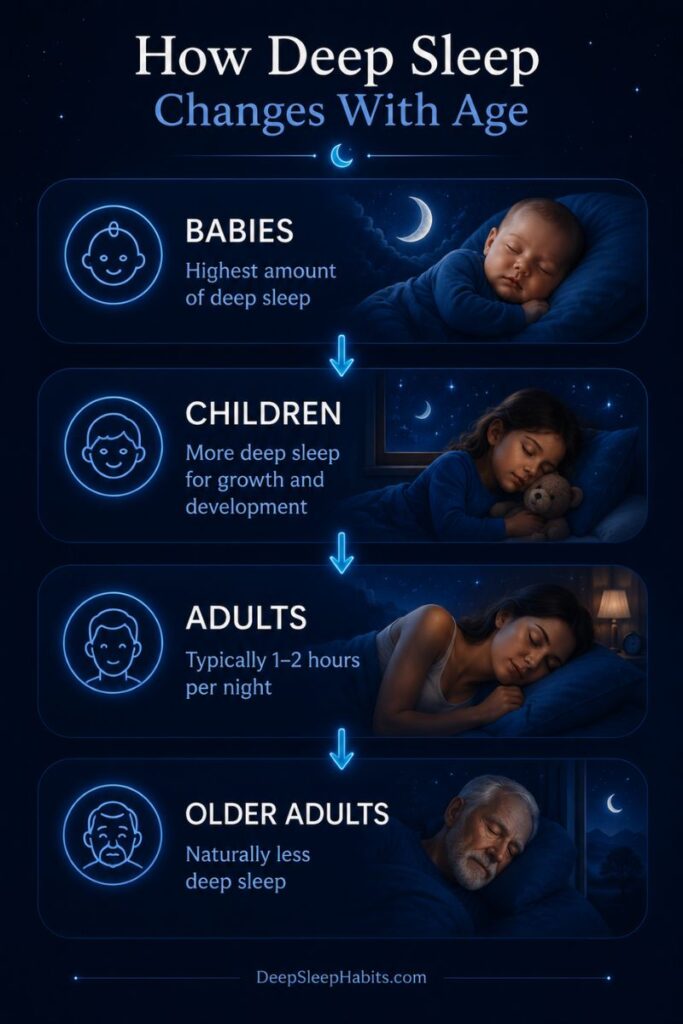
Researchers believe this happens because the brain gradually produces fewer slow brain waves, which are responsible for deep sleep. As a result, older adults often experience lighter sleep, wake up more frequently during the night, and spend more time in lighter sleep stages.
Although this change is considered a normal part of aging, it doesn’t mean quality sleep becomes unimportant. In fact, deep sleep continues to play a vital role in physical recovery, immune function, memory consolidation, and overall health throughout your life.
The good news is that while you can’t stop the natural aging process, healthy sleep habits can still help you make the most of the deep sleep your body is able to achieve.
Quick Tip
Focus on maintaining a consistent sleep schedule, getting regular physical activity, and creating a cool, quiet sleep environment. These habits may help support better sleep quality at any age.
2. Certain Medications and Medical Conditions May Affect Sleep Quality
Many people don’t realize that certain medications and underlying health conditions can influence how well they sleep. While these factors don’t affect everyone, they may reduce the amount of restorative sleep your body gets or cause more frequent awakenings throughout the night.

Some medications, including certain antidepressants, corticosteroids, stimulants, and beta-blockers, may interfere with your normal sleep cycle in some people. Depending on the medication and the individual, they can make it harder to fall asleep, increase nighttime awakenings, or change the balance between the different sleep stages.
Certain medical conditions can have a similar effect. For example, sleep apnea, chronic pain, restless legs syndrome, neurological disorders, and an overactive thyroid may interrupt your normal sleep patterns. When your sleep is repeatedly disrupted, your body has fewer opportunities to spend enough time in its most restorative stage.
If you regularly wake up feeling unrefreshed despite maintaining healthy sleep habits, or if you experience symptoms such as loud snoring, gasping for air, persistent pain, or unusual movements during the night, it’s worth discussing your symptoms with a healthcare professional. Identifying and treating the underlying cause may significantly improve your overall sleep quality.
Quick Tip
Never stop or change prescribed medication without speaking to your healthcare provider first. If you suspect that a medication is affecting your sleep, ask whether adjusting the timing or exploring alternative treatments may be appropriate.
3. Alcohol Before Bed Can Disrupt Your Sleep Cycle
Although alcohol may make you feel sleepy and help you fall asleep faster, it doesn’t necessarily improve the quality of your sleep. In fact, many people experience the opposite. While you may drift off more easily, alcohol can interfere with the normal progression through the different sleep stages during the night.

As your body begins to metabolize alcohol, sleep often becomes lighter and more fragmented. This can lead to more frequent awakenings, reduced restorative sleep, and feeling less refreshed the following morning—even after spending a full night in bed.
Alcohol may also suppress REM sleep during the first half of the night, causing your sleep cycle to become less balanced. As the alcohol wears off, your body often experiences a rebound effect, leading to lighter sleep and more disturbances during the second half of the night.
If drinking alcohol in the evening regularly leaves you feeling tired, groggy, or mentally foggy the next day, your sleep quality—not just the number of hours you slept—may be part of the reason.
Quick Tip
If you choose to drink alcohol, try to avoid it within three to four hours before bedtime. Giving your body more time to process alcohol may help you experience a more natural and restorative night’s sleep.
4. Caffeine Too Late in the Day Can Keep Your Brain Alert
Many people rely on coffee, tea, or energy drinks to stay focused during the day. While caffeine can temporarily boost alertness and concentration, it may also remain in your body much longer than most people realize.

Caffeine works by blocking adenosine, a natural chemical that gradually builds up in your brain throughout the day. Adenosine creates the feeling of sleepiness that helps you relax and prepare for bedtime. When caffeine blocks this process, your brain stays more alert, making it harder to fully wind down at night.
Even if you fall asleep without difficulty, caffeine consumed late in the afternoon or evening may reduce the quality of your sleep. Some people continue to experience lighter, less restorative sleep because the stimulating effects of caffeine haven’t completely worn off.
How sensitive you are depends on several factors, including your metabolism, age, genetics, and the amount of caffeine you consume. While one person may sleep well after an evening coffee, another may notice poorer sleep quality from a single afternoon cup.
Quick Tip
Try limiting coffee, strong tea, energy drinks, and other caffeinated beverages during the late afternoon and evening. If you’re sensitive to caffeine, switching to herbal tea or another caffeine-free drink later in the day may help your body relax more naturally before bedtime.
Having trouble falling asleep because your mind won’t slow down? You may also find our guide on Can’t Switch My Brain Off helpful.
5. An Irregular Sleep Schedule Can Disrupt Your Body Clock
Your body follows a natural 24-hour internal clock, also known as the circadian rhythm. This internal clock helps regulate when you feel awake, when you become sleepy, and how your body moves through the different stages of sleep throughout the night.

Going to bed and waking up at different times every day can confuse this natural rhythm. Frequent changes caused by shift work, staying up late on weekends, sleeping in, or an inconsistent bedtime routine may make it harder for your body to settle into a healthy sleep pattern.
When your circadian rhythm becomes disrupted, your body may not transition through the normal sleep stages as efficiently. As a result, you may wake up feeling less refreshed, even after spending enough hours in bed.
Keeping a regular sleep schedule helps train your internal clock to expect sleep at roughly the same time each night. Over time, this consistency can make it easier to fall asleep, stay asleep, and wake up feeling more energized.
Quick Tip
Try going to bed and waking up at approximately the same time every day—including weekends. Even a consistent routine within 30 to 60 minutes can help support healthier sleep patterns over time.
6. A Poor Sleep Environment Can Reduce Sleep Quality
Your bedroom plays a much bigger role in your sleep than many people realize. Even if you have healthy sleep habits, an uncomfortable sleeping environment can make it more difficult for your body to move naturally through the different sleep stages.

Common factors such as excessive noise, too much light, an uncomfortable mattress or pillow, and a bedroom that’s too warm or too cold may interrupt your sleep without you fully realizing it. These small disturbances can cause brief awakenings throughout the night, making your sleep feel less restorative by morning.
Temperature is especially important. Research suggests that a slightly cool bedroom helps support better sleep by allowing your body’s core temperature to naturally decrease before and during the night. Bedrooms that are too warm may increase restlessness, frequent awakenings, and overall discomfort.
Creating a calm, dark, cool, and quiet sleep environment gives your body the best chance to experience uninterrupted, restorative sleep throughout the night.
Quick Tip
Keep your bedroom cool, dark, and as quiet as possible. Blackout curtains, comfortable bedding, minimizing electronic devices, and maintaining a room temperature of around 16–19°C (60–67°F) may help improve your overall sleep quality.
If warm nights make it difficult to sleep, read our guide on Hard to Sleep in Hot Weather for more practical tips.
7. Stress and Anxiety Keep Your Mind Active
Stress and anxiety are among the most common reasons people struggle to get enough deep sleep. Even if you fall asleep quickly, an overactive mind can prevent your brain and body from reaching the deepest, most restorative stages of sleep.

When you’re under stress, your body produces higher levels of cortisol, often called the stress hormone. Elevated cortisol keeps your nervous system more alert, making it harder for your body to fully relax. As a result, you may spend less time in deep sleep and experience more frequent awakenings throughout the night.
Many people notice that stressful periods leave them feeling exhausted despite sleeping for seven or eight hours. This often happens because the quality of sleep has been reduced. Instead of enjoying long, uninterrupted periods of deep sleep, the brain remains more active and sleep becomes lighter and more fragmented.
Anxiety can have a similar effect. Racing thoughts, worrying about tomorrow, replaying conversations, or constantly checking the time during the night all make it more difficult for your body to enter its deepest sleep stages. Over time, chronic stress may create a cycle where poor sleep increases stress levels, making restful sleep even harder to achieve.
Fortunately, reducing stress before bedtime can make a significant difference. Relaxation techniques, limiting screen time, maintaining a consistent bedtime, and creating a calming evening routine can all help prepare your brain for deeper, more restorative sleep.
Quick Tip
Create a relaxing wind-down routine 30–60 minutes before bed. Reading, gentle stretching, breathing exercises, meditation, or listening to calming music may help lower stress levels and support deeper sleep.
How to Improve Deep Sleep Naturally
The good news is that deep sleep can often be improved through simple lifestyle changes. While age naturally affects the amount of deep sleep you get, many other factors—such as stress, sleep habits, caffeine, alcohol, and your sleeping environment—are within your control.
Improving your deep sleep isn’t about sleeping longer; it’s about creating the right conditions for your brain and body to reach the deepest, most restorative stages of sleep. Small, consistent changes can make a noticeable difference in how refreshed you feel each morning.
Here are some of the most effective ways to naturally improve deep sleep:
1. Keep a Consistent Sleep Schedule
Going to bed and waking up at roughly the same time every day helps regulate your body’s internal clock. When your sleep schedule is consistent, your brain learns when it’s time to prepare for sleep, making it easier to move naturally through each sleep cycle.
If your bedtime changes dramatically from one night to the next, your body has to keep adjusting its internal rhythm. Over time, this may reduce your overall sleep quality—even if you’re spending enough hours in bed.
2. Create a Sleep-Friendly Bedroom
Your bedroom should make it as easy as possible for your brain to relax. A cool temperature, minimal noise, comfortable bedding, and a dark room all help reduce interruptions during the nigh
Even small disturbances—such as light from electronic devices or a room that’s too warm—can prevent your body from staying asleep long enough to spend more time in deep sleep.
3. Reduce Caffeine and Alcohol Before Bed
Caffeine can remain in your body for many hours after your last cup of coffee, while alcohol often fragments sleep during the second half of the night. Although alcohol may make you feel sleepy at first, it usually reduces the quality of your sleep rather than improving it.
Choosing water or herbal tea later in the evening may help support a more restful night.
4. Manage Stress Before Bed
An overactive mind is one of the biggest barriers to deep sleep. If you regularly go to bed worrying about tomorrow, replaying conversations, or feeling mentally alert, your body may struggle to fully relax.
Creating a calming bedtime routine can help signal to your brain that it’s time to slow down. Reading, breathing exercises, gentle stretching, journaling, or meditation are all simple ways to prepare for sleep.
5. Stay Physically Active
Regular exercise has consistently been linked to better sleep quality. Physical activity helps regulate your circadian rhythm, reduces stress, and allows your body to build up healthy sleep pressure throughout the day.
For most people, moderate exercise during the morning or afternoon is ideal, although light evening activities such as walking or stretching may also support relaxation.
6. Don’t Ignore Ongoing Fatigue
If you’re sleeping for seven to nine hours every night but still wake up feeling exhausted, the problem may not be your sleep duration—it could be the quality of your sleep.
Quick Tip
You don’t have to change everything overnight. Start with one or two habits—such as maintaining a consistent bedtime or reducing caffeine in the afternoon—and build from there. Small improvements practiced consistently often lead to the biggest long-term benefits for your sleep quality.
When Should You See a Doctor
Most people experience occasional nights of poor sleep, and this usually isn’t a cause for concern. However, if you consistently struggle to get restful sleep despite maintaining healthy sleep habits, it may be worth speaking with a healthcare professional.
Persistent poor-quality sleep can sometimes be linked to an underlying medical condition, such as sleep apnea, restless legs syndrome, chronic pain, thyroid disorders, depression, or anxiety. Identifying and treating the underlying cause may significantly improve both your sleep quality and your overall health.
You should also consider seeking medical advice if you:
- Regularly wake up gasping for air or choking during sleep.
- Snore loudly and feel excessively tired during the day.
- Sleep seven to nine hours but still wake up feeling exhausted most mornings.
- Experience ongoing insomnia that lasts longer than several weeks.
- Frequently feel sleepy while driving, working, or performing daily activities.
A doctor may recommend further evaluation or refer you to a sleep specialist if necessary. In some cases, a sleep study can help identify disorders that reduce the amount of restorative deep sleep you get each night.
The earlier a sleep disorder is identified, the sooner you can begin finding effective treatments and improving your long-term health.
Frequently Asked Questions
Is deep sleep better than REM sleep?
Neither stage is better because they perform different functions. Deep sleep primarily supports physical recovery and restoration, while REM sleep is important for learning, memory, emotional processing, and dreaming. Healthy sleep includes repeated cycles containing both non-REM and REM sleep throughout the night.
How much deep sleep should adults get?
Adults often spend roughly 10–20% of their total sleep time in deep sleep, although the amount varies with age, health, and individual sleep patterns. For many adults, this may equal approximately one to two hours. Consumer sleep trackers provide estimates and cannot measure sleep stages as accurately as a clinical sleep study.
Can you increase deep sleep naturally?
You cannot directly control a particular sleep stage, but healthy habits may support your overall sleep quality. Maintain consistent sleep and wake times, exercise regularly, manage stress, limit alcohol and late caffeine, and keep your bedroom cool, dark, and quiet. Addressing frequent awakenings may also help protect uninterrupted sleep cycles.
Is it normal to get less deep sleep as you get older?
Yes. The amount of deep sleep people experience generally decreases with age, although individual patterns vary. Getting less deep sleep than you did when you were younger does not automatically indicate a sleep disorder. Consistent habits and addressing problems that repeatedly interrupt sleep remain important at every age.
What happens if you don’t get enough deep sleep?
Too little restorative sleep may leave you feeling tired, mentally foggy, or less physically recovered the following day. However, you cannot reliably diagnose a deep-sleep deficiency using symptoms or a consumer tracker alone. Speak with a healthcare professional if poor sleep or significant daytime tiredness continues despite adequate time in bed.
Final Thoughts
Deep sleep is one of the most important parts of a healthy night’s sleep. While you can’t completely control how much deep sleep you get each night, healthy habits can significantly improve your chances of reaching this restorative stage of sleep.
By maintaining a consistent sleep schedule, managing stress, creating a comfortable sleep environment, and avoiding common sleep disruptors like caffeine and alcohol late in the day, you give your body the best opportunity to recover, restore energy, and wake up feeling refreshed.
If you regularly wake up tired despite getting enough sleep, don’t ignore it. Improving your sleep quality—not just your sleep duration—can make a meaningful difference to your physical health, mental well-being, and overall quality of life.
Pingback: Why do i wake up in the middle of the night? 9 Causes